Reclaiming the Kerbside

How can parklets become socially embedded infrastructures by responding to the everyday life around them?

Major Research Project
MSc Urban Design and City Planning
The Bartlett School of Planning, UCL

Hackney, London · 2026
ObservationMappingInterviewsParticipation
Read Full Report ↗

Project Overview

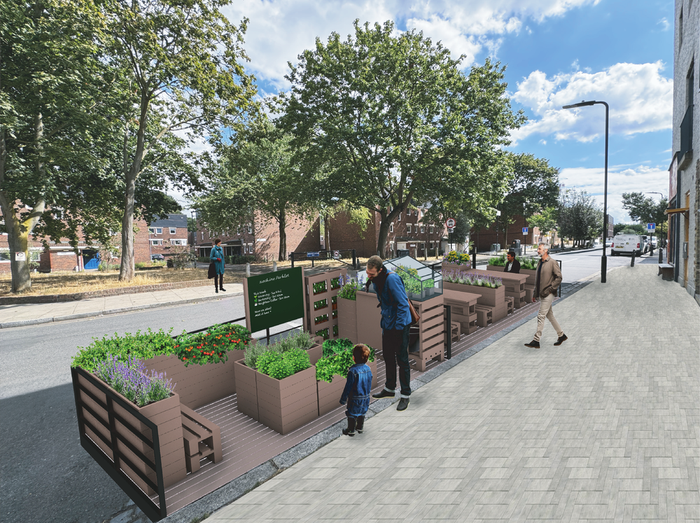
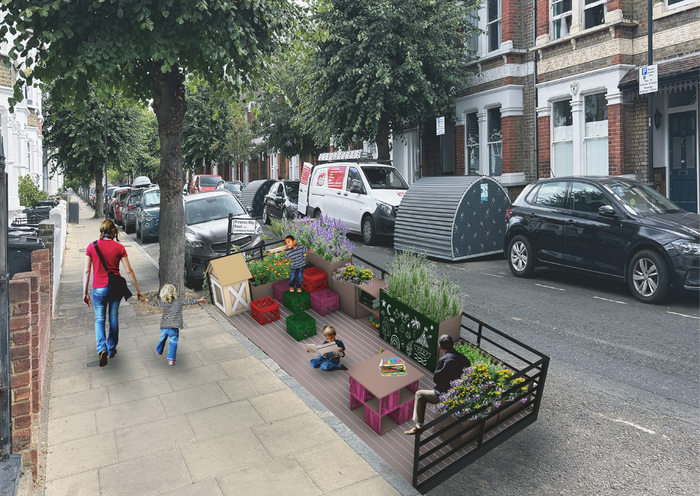
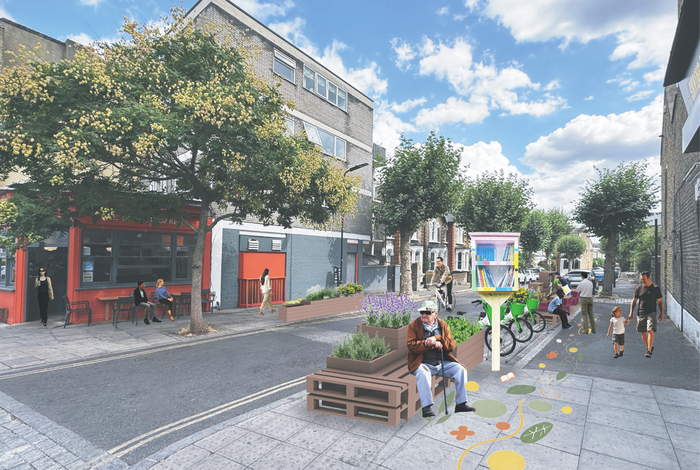
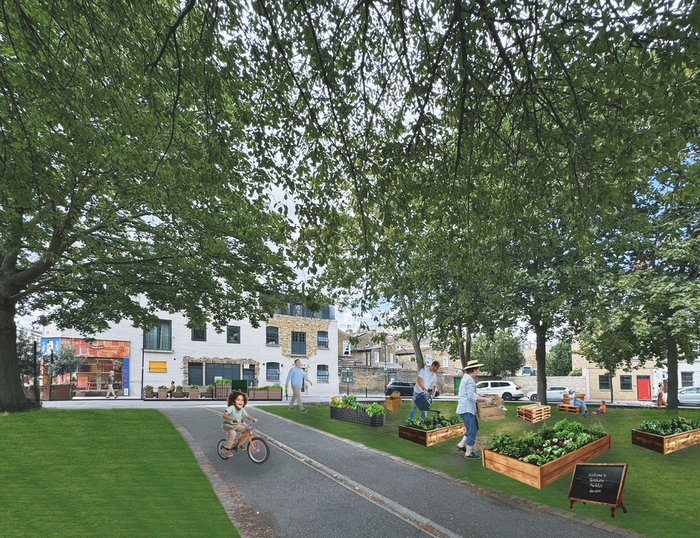
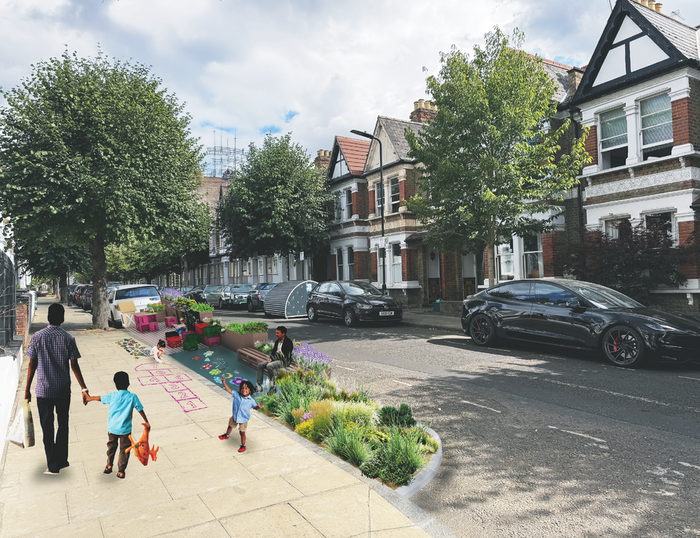
Reclaiming the Kerbside explores how community parklets can become more socially embedded within everyday urban life.

The research examined parklets across Hackney through a borough-wide survey, detailed observation of three contrasting sites and interviews with residents and local authorities.

It found that parklets with similar physical forms could take on very different roles depending on their street context, patterns of everyday use and forms of care. These findings informed a Community Parklet Framework that supports communities from project initiation through design, making, stewardship and adaptation.

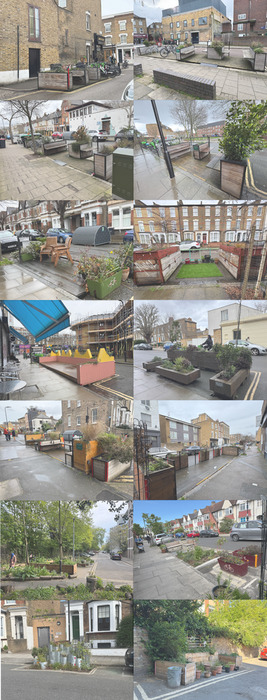
Visual survey of 16 community parklets across Hackney

Research Question

How can community parklets be reconfigured as socially embedded infrastructures through a socio-temporal understanding of everyday urban life?

01

Research Context

01

From Tactical Intervention to Formal Programme

Parklets emerged as temporary experiments that reclaimed kerbside parking space for public use.

As cities formalised them through programmes, permits and design guidance, they became easier to implement more widely. At the same time, some of their participatory and experimental qualities became less prominent.
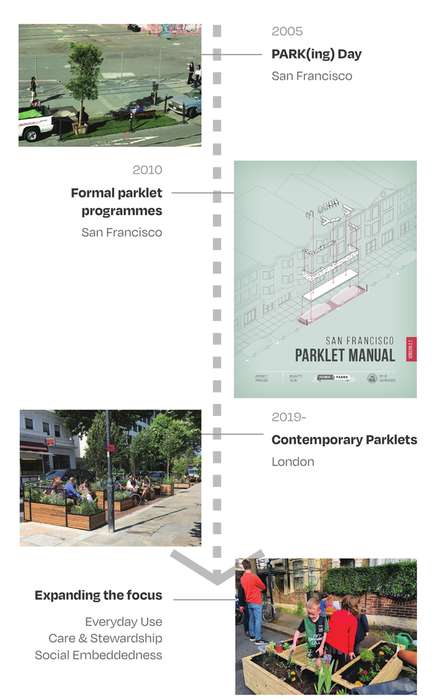
Evolution from PARKing Day through formal parklet programmes to an expanded focus on everyday use, care, stewardship and social embeddedness

02

Where Current Approaches Fall Short

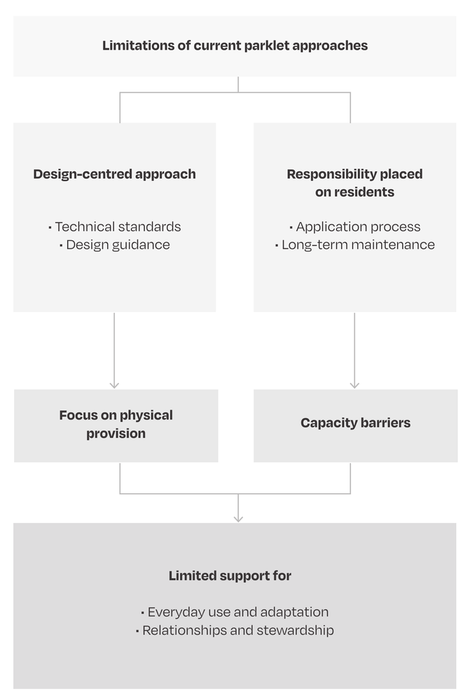
Contemporary parklet programmes often focus on physical provision, technical standards and implementation.

Residents may also be expected to navigate applications, funding and long-term maintenance.

This leaves less support for understanding how parklets become part of everyday life, how social relationships develop around them and how stewardship can be sustained over time.

Limitations of current parklet approaches showing design centred provision and responsibility placed on residents

03

A Socio-Temporal Perspective

The research examined parklets through the changing relationship between activity, place and time.

It considered their spatial context, everyday patterns of use and the relationships that sustain them over time.

This perspective provided a way to understand parklets as part of wider street life and as spaces that continue to develop after installation.

Rhythmanalysis informed the observational approach as a research strategy for examining changing patterns of everyday street life.

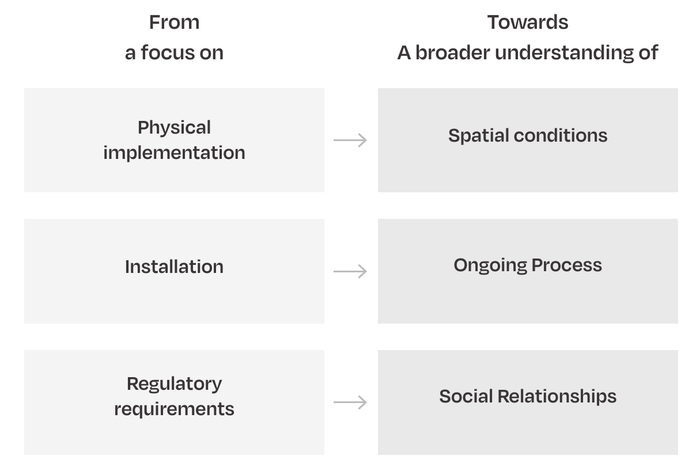
Conceptual shift from physical implementation, installation and regulatory requirements toward spatial conditions, ongoing process and social relationships

04

Why Hackney?

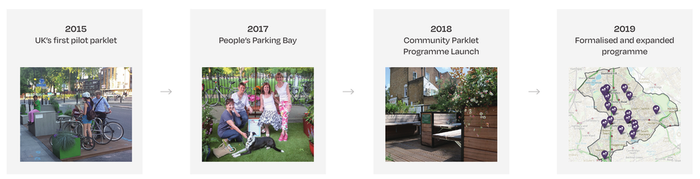
Hackney was selected because it was the first London borough to establish a formal community parklet programme and remains one of the longest-running examples.

Its resident-led model made visible the relationship between community initiative, formal permissions and long-term stewardship.

Timeline of Hackney's Community Parklet Programme from the 2015 pilot to the formalised and expanded 2019 programme
02

Reading Everyday Parklet Life

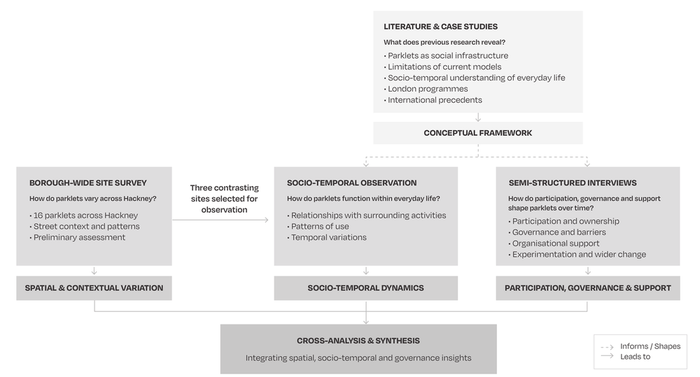
The research began with a survey of 16 parklets across Hackney, documenting their street context, physical characteristics and surrounding activities.

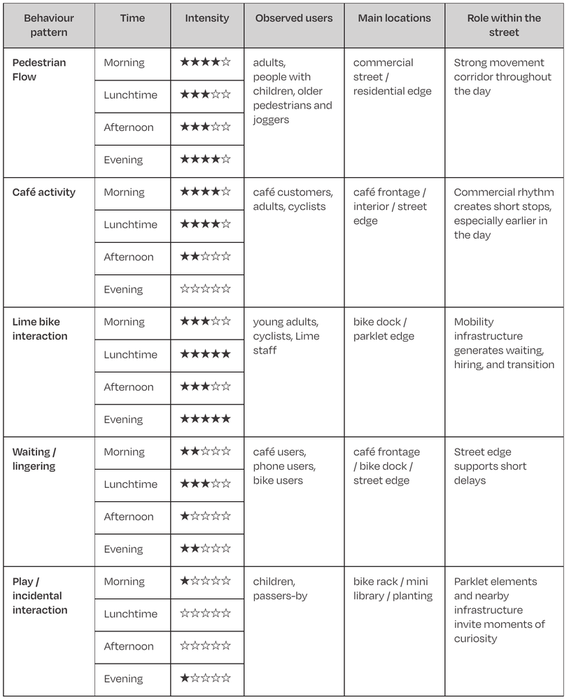
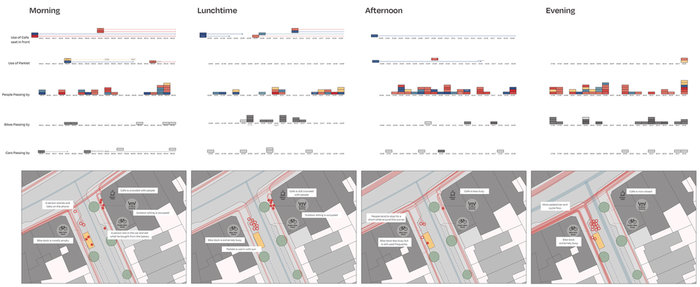
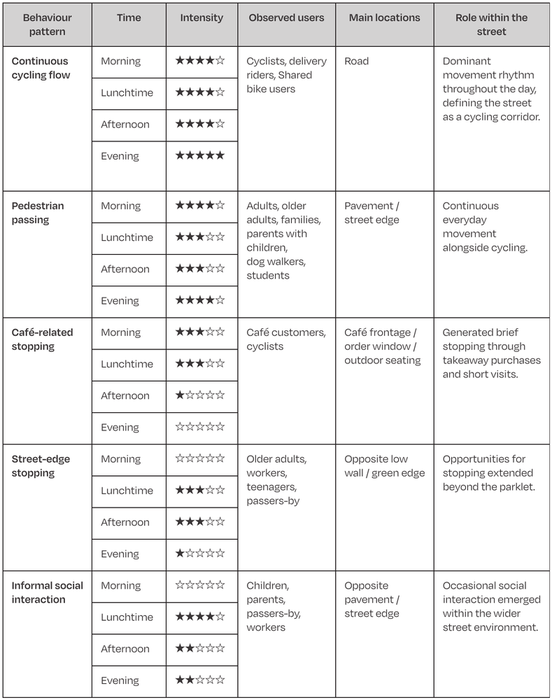
Three contrasting sites were selected for closer observation. Each was observed across four periods of the day to examine how movement, stopping, interaction and parklet use changed over time.

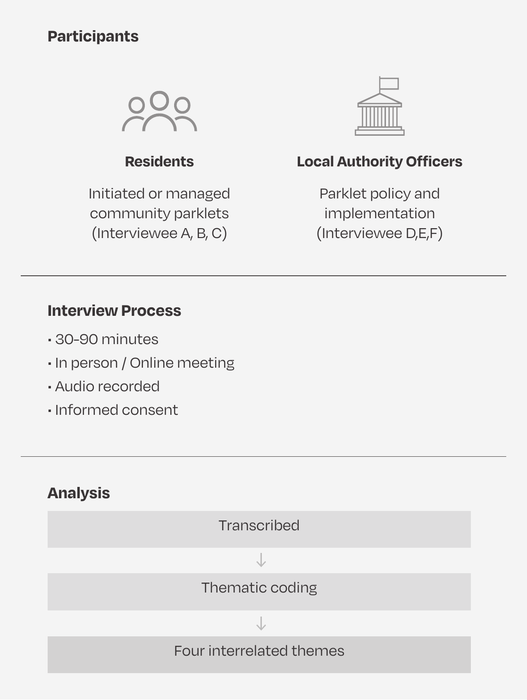
Interviews with residents and local authority officers added another perspective, focusing on how parklets were initiated, managed and sustained.

Research design sequence from literature and case studies through site survey, socio-temporal observation, interviews and cross-analysis

Borough-wide survey

16 Parklets Across Hackney

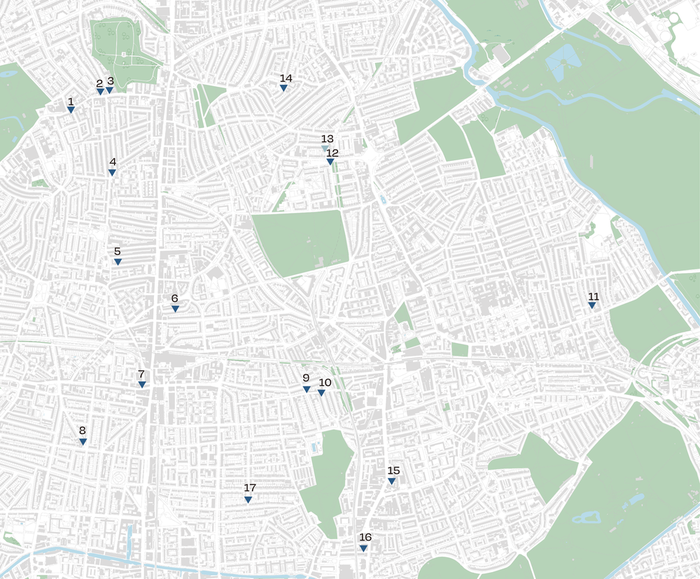
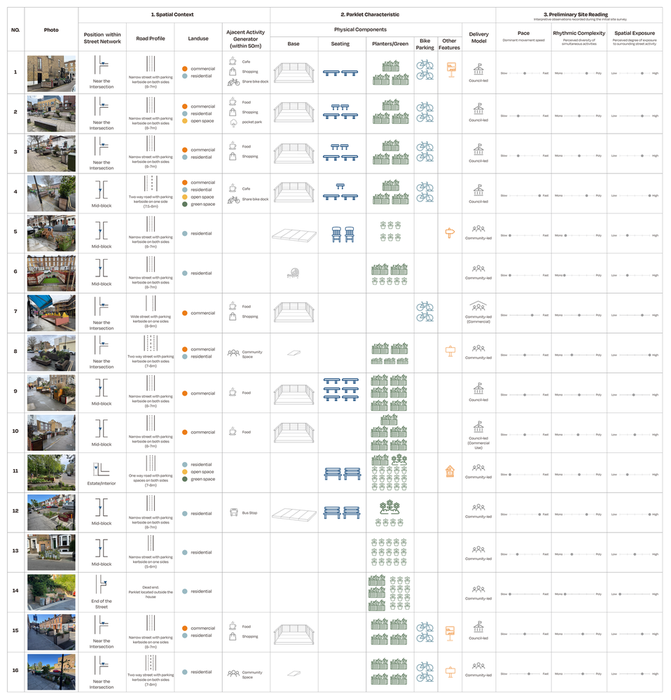
A borough-wide survey documented 16 existing parklets and their surrounding street environments.

Each site was compared through its spatial context, physical characteristics and an initial socio-temporal reading. This wider survey provided the basis for selecting contrasting sites for detailed observation.

Map locating parklets across Hackney

The full survey compared each parklet across spatial context, physical characteristics and preliminary socio-temporal conditions.

View full comparative survey ↓Hide full comparative survey ↑

Table 5.1

Comparative survey of Hackney parklets (n=16)

Full comparative survey of 16 Hackney parklets
Annotation strip accompanying the comparative parklet survey

Preliminary reading criteria

Reading Across the Borough

01

Pace

How movement and stopping unfolded around each parklet.

02

Rhythmic complexity

How many different activities and temporal patterns overlapped.

03

Spatial exposure

How open or enclosed each parklet was within its street setting.

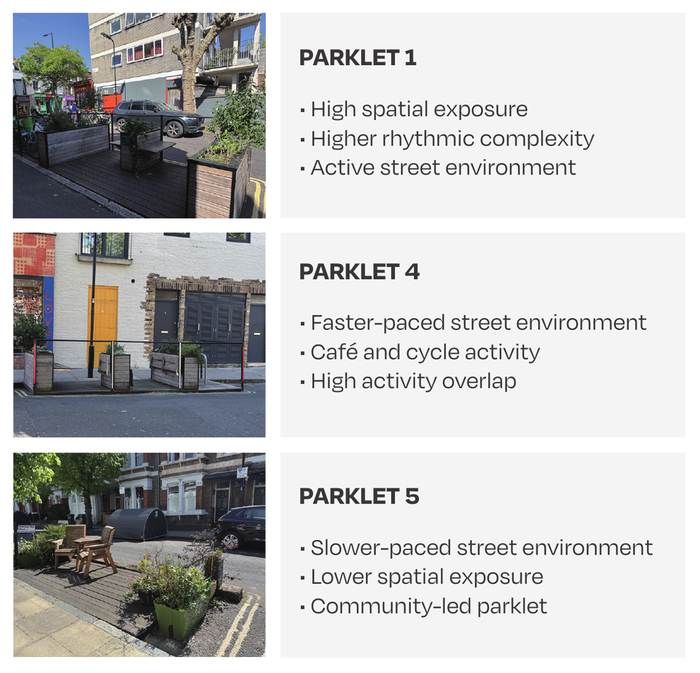
Selecting Three Contrasting Sites

Three contrasting observation sites selected from the borough-wide survey

Observation Method

Socio-Temporal Observation

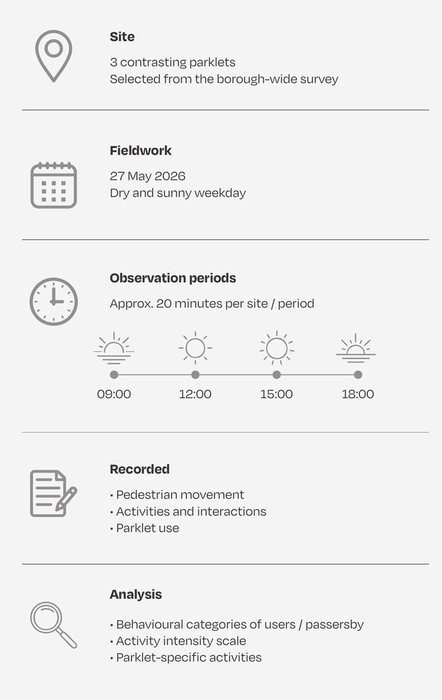
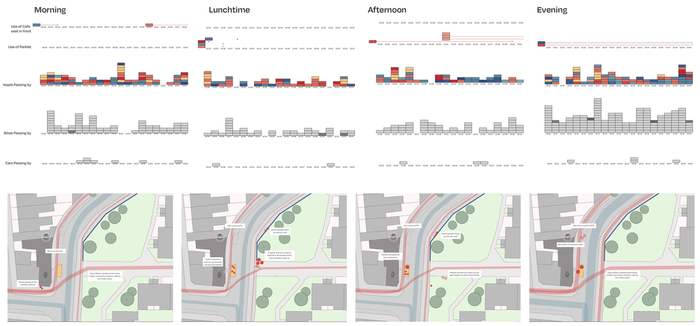
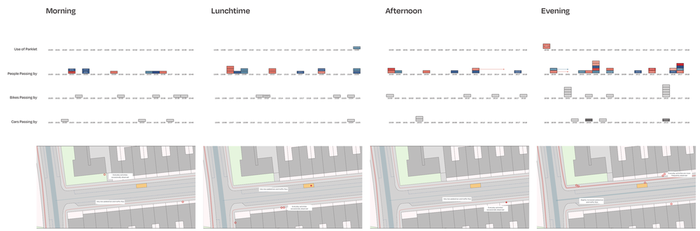
The three selected parklets were observed at four points across one weekday.

The observation followed changes in movement, activities, interactions and parklet use across the surrounding street environment. Rhythmanalysis informed this process as a research strategy, drawing attention to how activity, place and time changed in relation to one another.
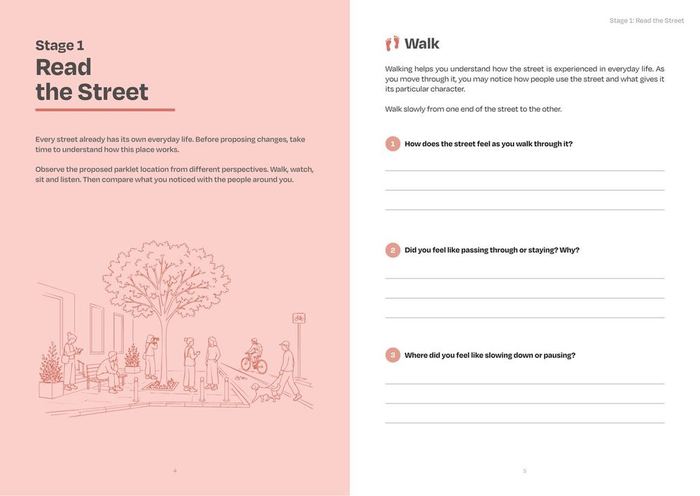
Figure 5.3, socio-temporal observation method across three parklets and four periods of the day

Observation Material

Three Sites Across the Day

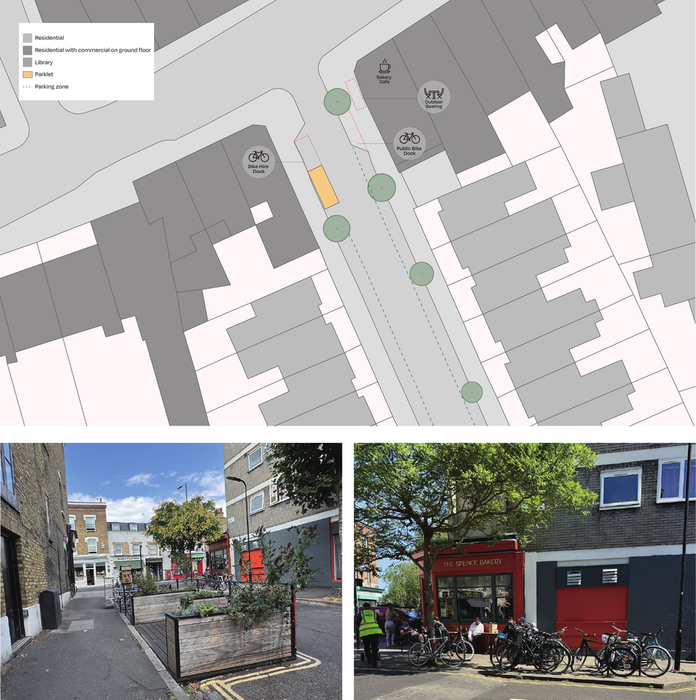
Parklet 1

Parklet 1 site reference
Additional observation material for Parklet 1
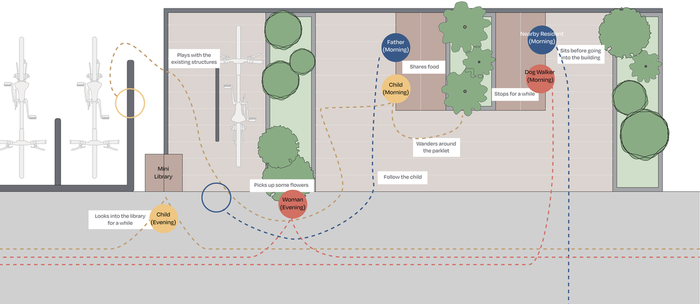
Temporal observation drawing for Parklet 1

Parklet 4

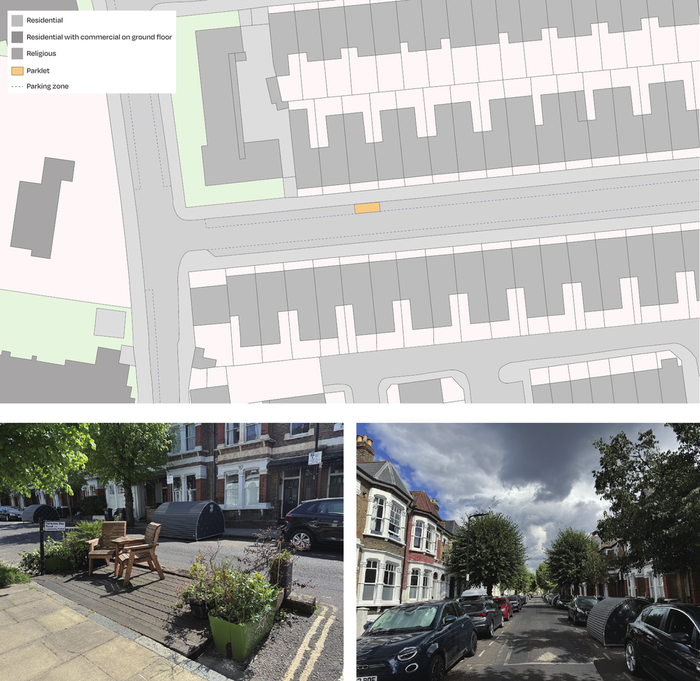
Parklet 4 site reference
Additional observation material for Parklet 4
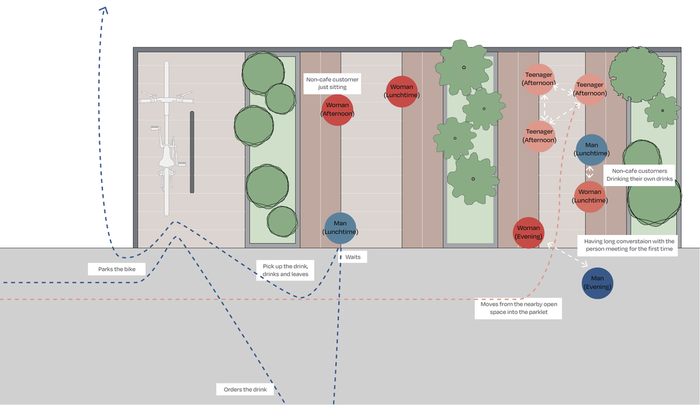
Temporal observation drawing for Parklet 4

Parklet 5

Parklet 5 site reference
Additional observation material for Parklet 5
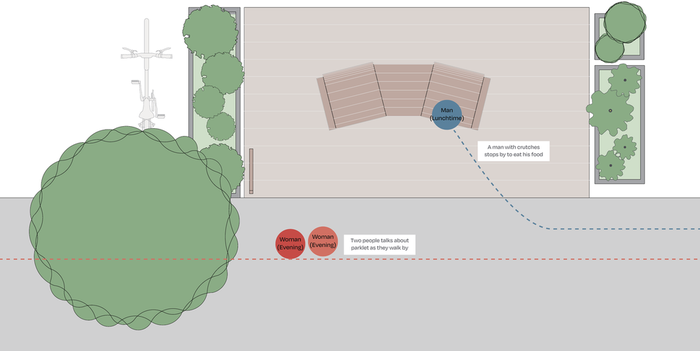
Temporal observation drawing for Parklet 5
03

Three Streets, Three Everyday Roles

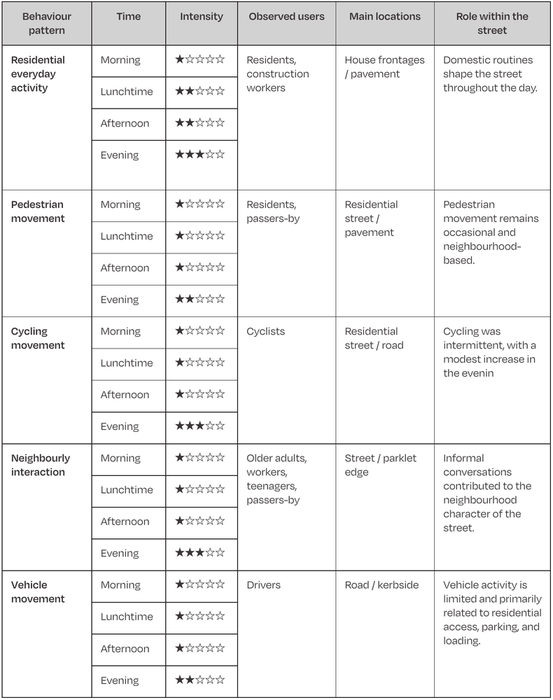
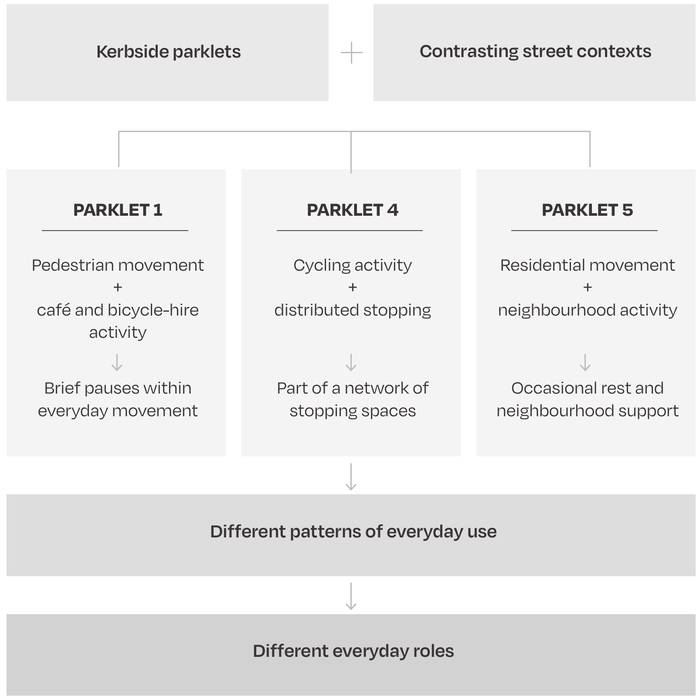
The three parklets shared similar physical elements, yet each became part of everyday street life in a different way.

Their roles were shaped by the activities, movement patterns and social conditions around them.

Parklet 1

Everyday Pause

Commercial activity, pedestrian movement and bicycle hire created repeated moments of short stopping.

The parklet became a place for brief pauses within everyday journeys.

Spatial patterns of observed parklet use at Parklet 1

Parklet 4

Distributed Stopping

Cycling, café activity and informal stopping took place across several street edges.

The parklet became one point within a wider network of places to pause and meet.
Spatial patterns of observed parklet use at Parklet 4

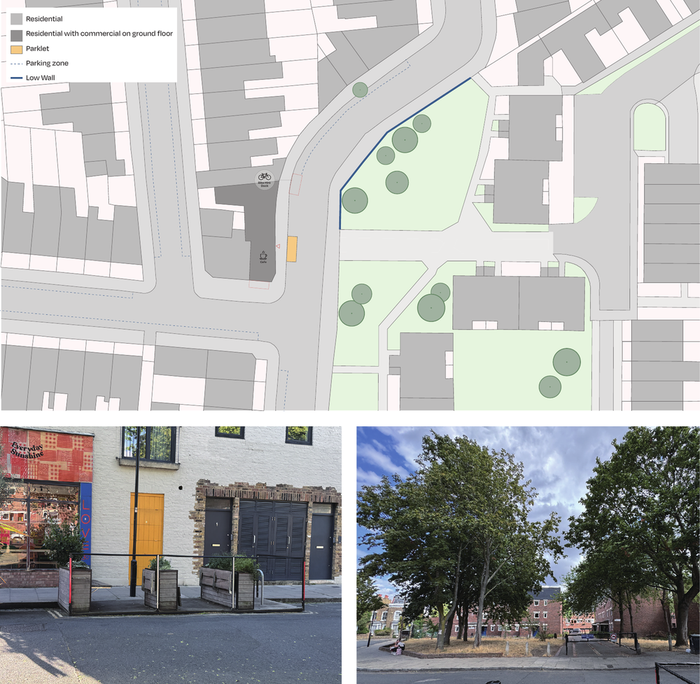
Parklet 5

Neighbourhood Support

The quieter residential street produced fewer direct occupations, yet the parklet remained part of local routines and neighbourhood awareness.
Its value could not be understood through occupation alone.

Spatial patterns of observed parklet use at Parklet 5
Cross-case comparison of street contexts, use and everyday roles

What the Observation Added

Street context shapes what a parklet becomes.

Similar physical interventions acquired different roles in different streets.

Parklets work as part of wider street environments.

Their use depended on nearby activities, routes and places to stop.

Occupation does not fully explain social value.

Availability, visibility and occasional interaction could also contribute to everyday neighbourhood life.

04

Beyond Observation

Observation revealed how parklets became part of different street contexts, but it could not explain how they were initiated, cared for or sustained over time.

Semi-structured interviews with residents involved in community parklets and local authority officers explored the relationships, responsibilities and institutional conditions behind these spaces.

Interview research material accompanying Beyond Observation

Theme 01

Everyday Participation

Community parklets often began with practical neighbourhood needs, such as somewhere to stop, more greenery or a shared place within the street.

Their social value developed gradually through repeated encounters. Residents described neighbours contributing plants, books, repairs and everyday care as the parklet became part of local life.

“Every day, children will come and see what’s new.”

Theme 02

Starting Was Often the Hardest Part

Residents described formal applications, neighbourhood disagreement and the amount of personal effort required to start a parklet as major barriers.

Local authority officers also recognised these difficulties while managing legal responsibility, public safety, funding and procedural requirements.

The interviews revealed a gap between the support residents needed and the responsibilities institutions had to manage.

“An incredible amount of energy and positivity.”

Theme 03

Care Could Not Depend on One Person

Routine maintenance could be manageable, but wider stewardship involved planting, watering, repairing, fundraising, coordinating volunteers and sustaining local participation.

Several successful parklets depended on highly committed individuals. Shared responsibility and wider community ownership therefore became important conditions for long-term stewardship.

“A little bit of council ownership, a little bit of community ownership.”

Theme 04

Parklets as Places to Experiment

Residents and local authority officers both described value in testing ideas before committing to permanent change.

Temporary interventions allowed people to experience proposals, respond to them and adapt them through use.

In some cases, a single parklet also became the starting point for planting, gardening and wider changes to the surrounding street.

“A right to experiment.”

What the Interviews Added

Social value developed through repeated participation and visible care.

Starting and sustaining community parklets required support beyond individual resident effort.

Parklets could act as experimental starting points for wider street change.

These findings shifted the project from asking how a parklet should be designed to considering what forms of support, participation and stewardship were needed throughout its life.

They became the basis for the Community Parklet Framework.

05

From Findings to Framework

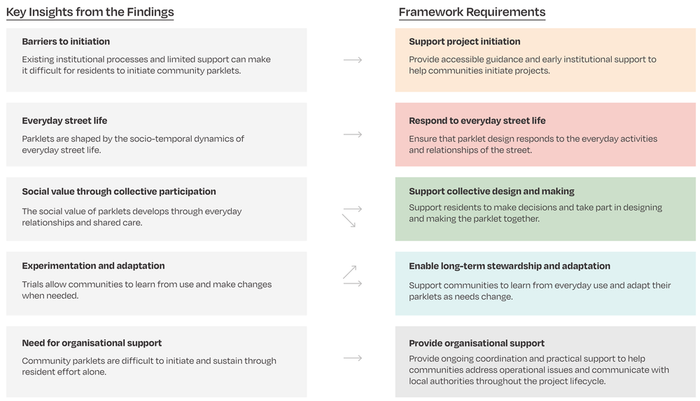
The spatial observations and interviews were synthesised into five requirements for supporting community parklets throughout their development and stewardship.

Five synthesised research insights connected by arrows to five Community Parklet Framework requirements

These requirements informed the structure of the Community Parklet Framework.

Framework Structure

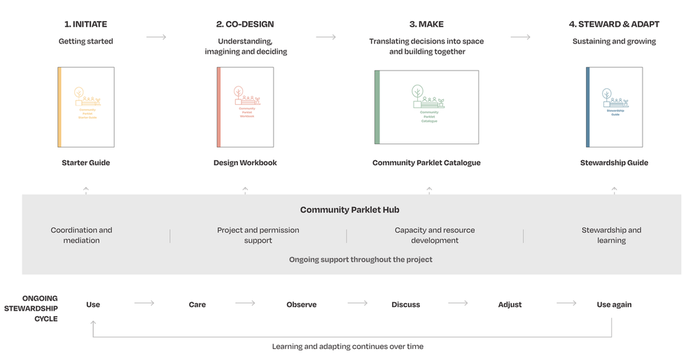
Community Parklet Framework

The framework supports communities as they initiate projects, understand their streets, make decisions together and continue caring for the space after installation.

Structure and ongoing process of the Community Parklet Framework

Initiate

Starter Guide

From individual interest to collective action

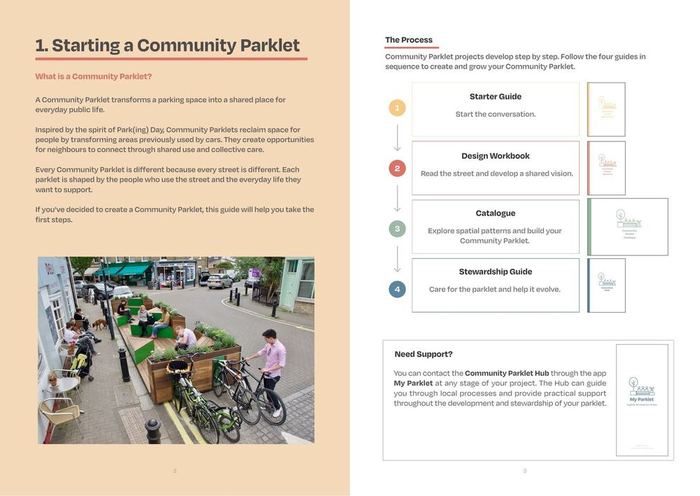
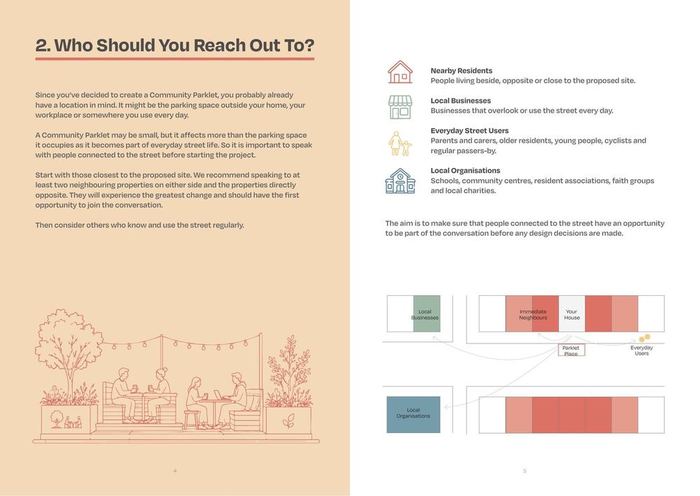
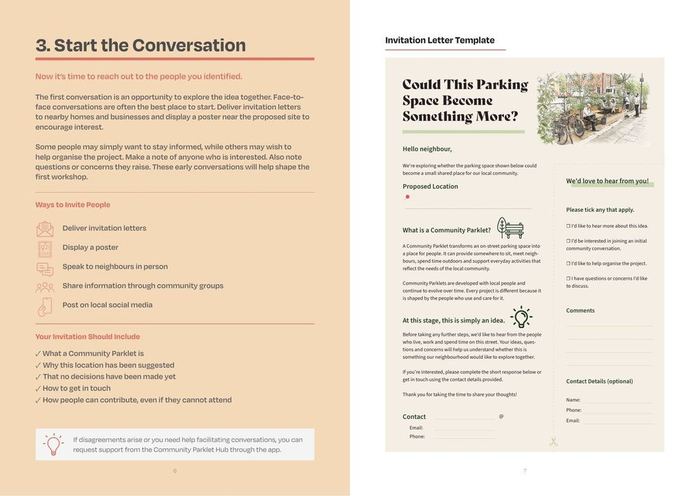
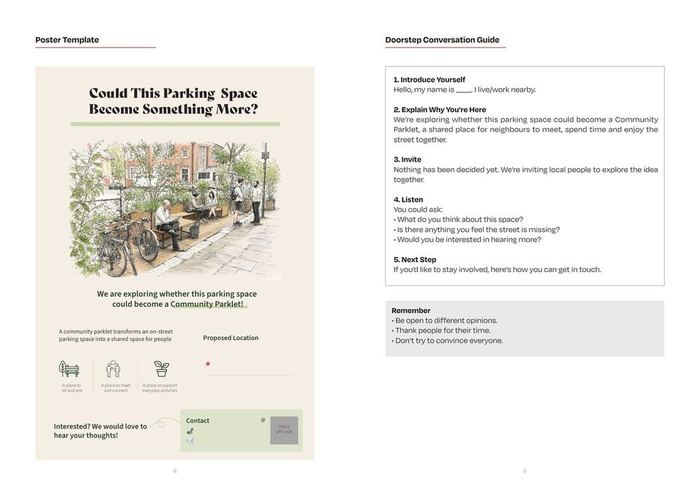
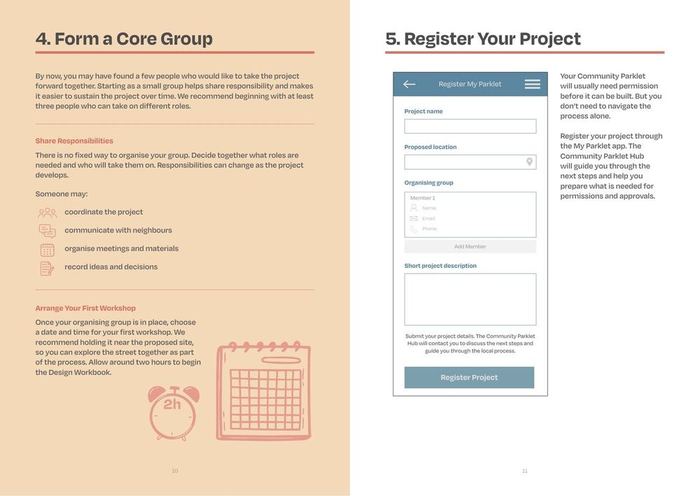
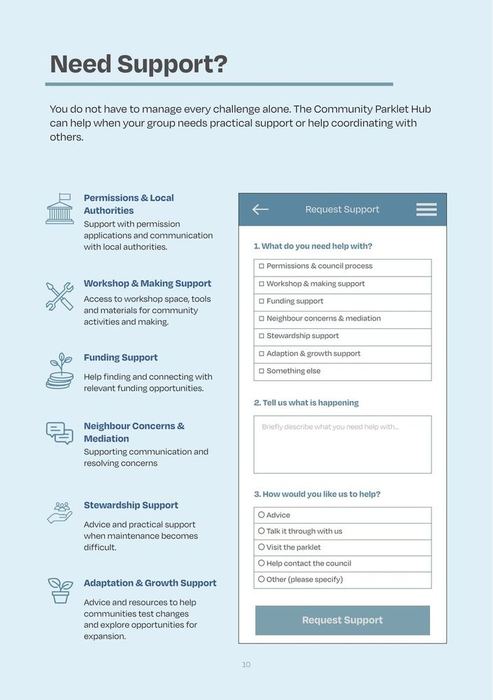
The Starter Guide supports the early stages of a community parklet project. It helps residents introduce the idea, identify people connected to the street and begin conversations before formal design decisions are made.

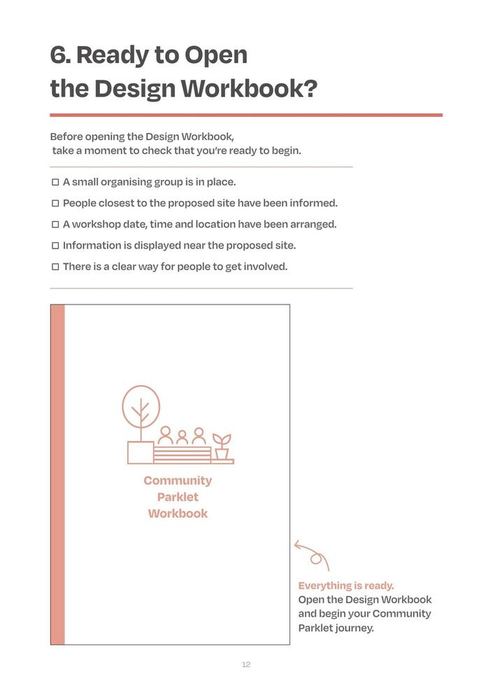
It also helps a small organising group form and connects the project with the Community Parklet Hub for permissions and practical support.

Community Parklet Starter Guide page 1
Community Parklet Starter Guide pages 2 and 3
Community Parklet Starter Guide pages 4 and 5
Community Parklet Starter Guide pages 6 and 7
Community Parklet Starter Guide pages 8 and 9
Community Parklet Starter Guide pages 10 and 11
Community Parklet Starter Guide page 12

Co-design

Design Workbook

Reading the street before designing it

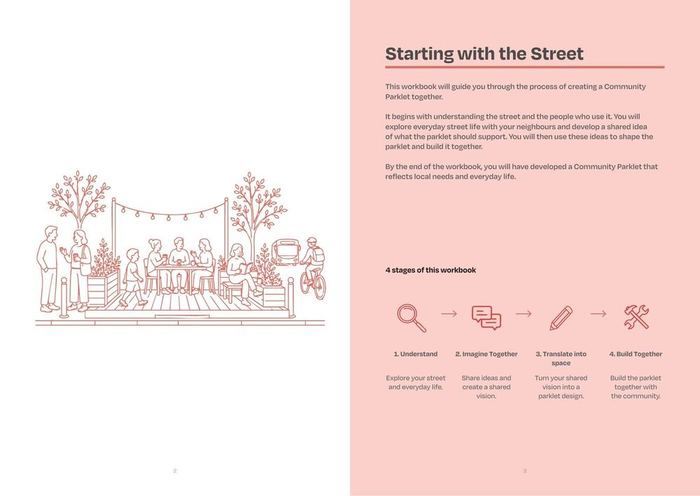
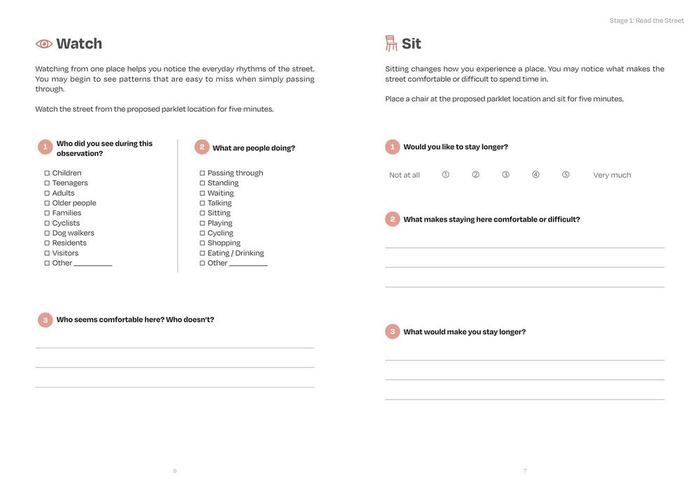
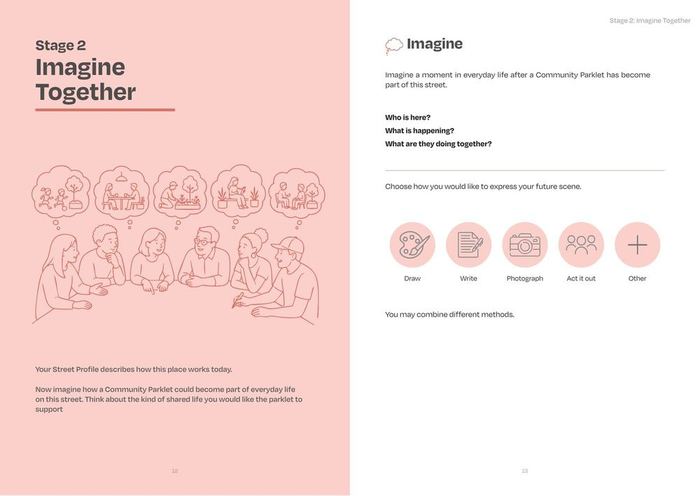
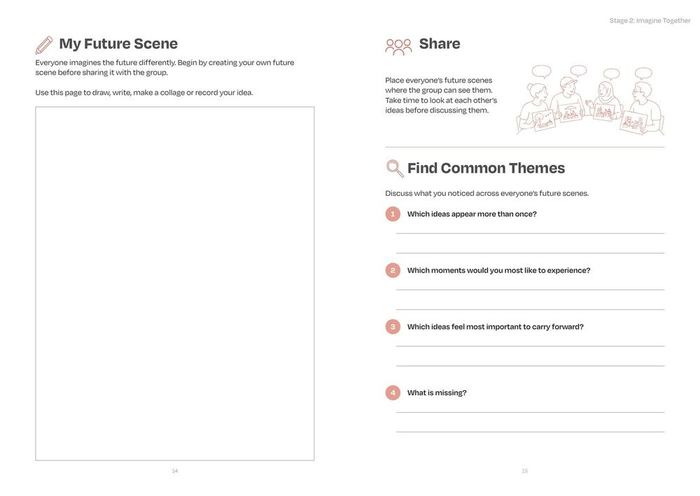
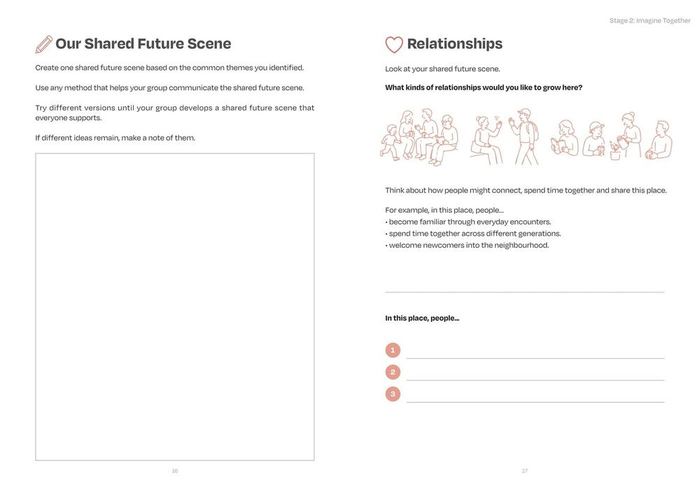
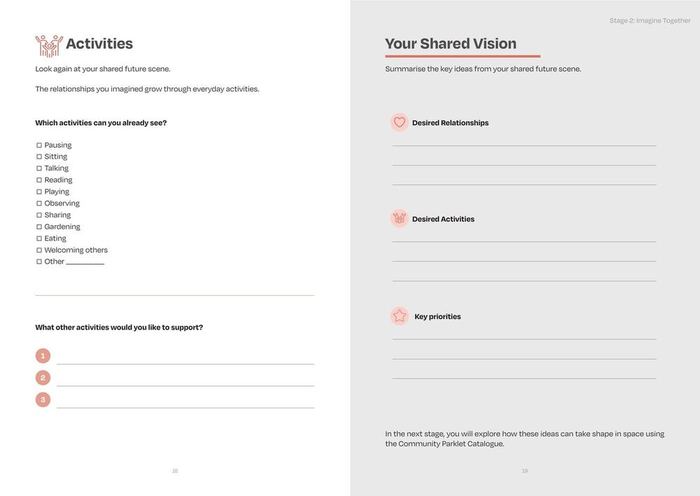
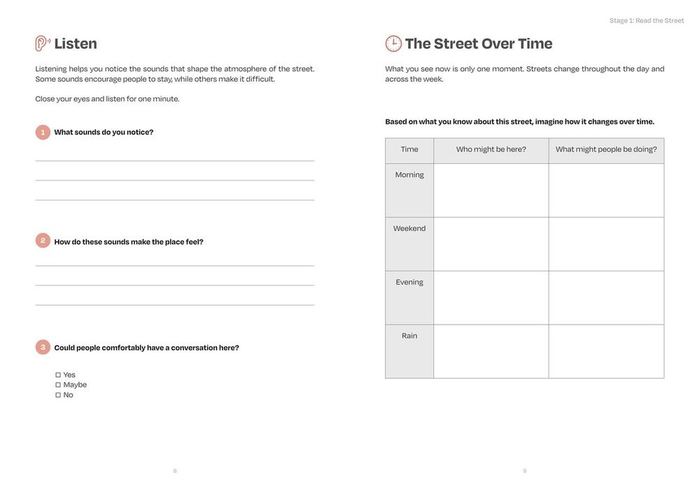
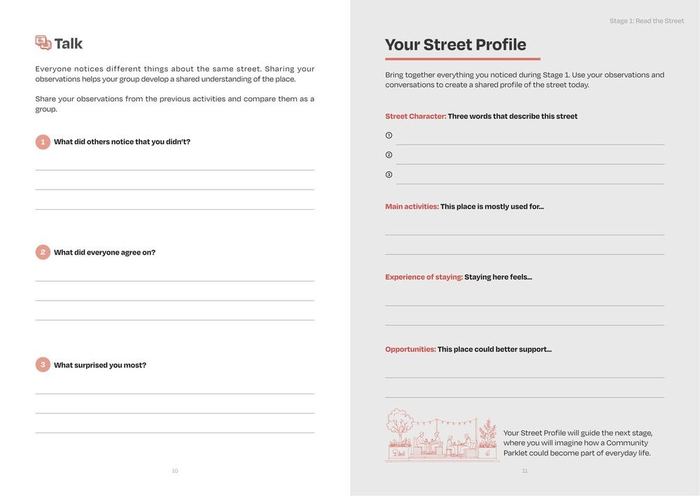
The Design Workbook helps participants develop a shared understanding of everyday street life before making spatial decisions.

Participants explore movement, activity, comfort, atmosphere and change over time through walking, watching, sitting, listening and discussion. Individual observations are brought together into a shared Street Profile that becomes the basis for imagining and designing the parklet.

Community Parklet Workbook page image 1
Community Parklet Workbook page image 2
Community Parklet Workbook page image 3
Community Parklet Workbook page image 4
Community Parklet Workbook page image 5
Community Parklet Workbook page image 6
Community Parklet Workbook page image 7
Community Parklet Workbook page image 8
Community Parklet Workbook page image 9
Community Parklet Workbook page image 10
Community Parklet Workbook page image 11
Community Parklet Workbook page image 12
Community Parklet Workbook page image 13
Community Parklet Workbook page image 14
Community Parklet Workbook page image 15
Community Parklet Workbook page image 16

Make

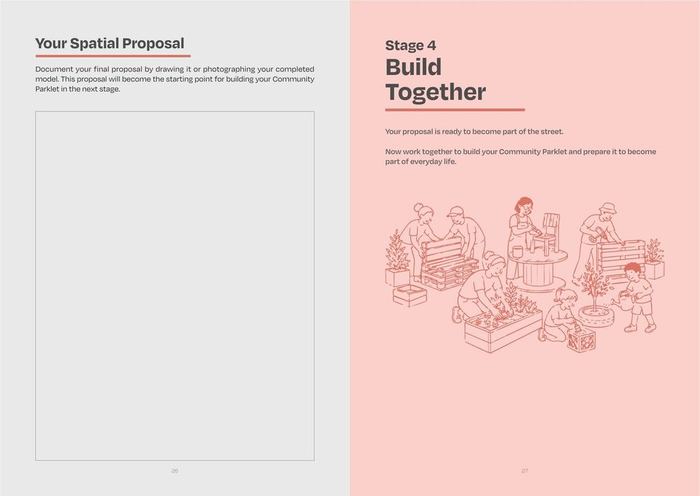
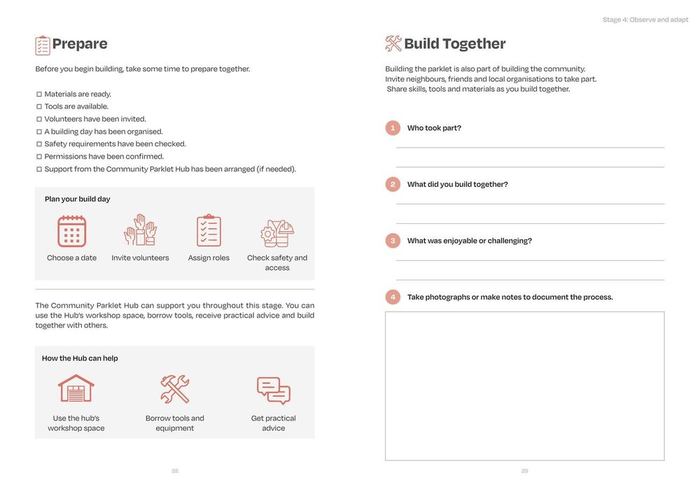
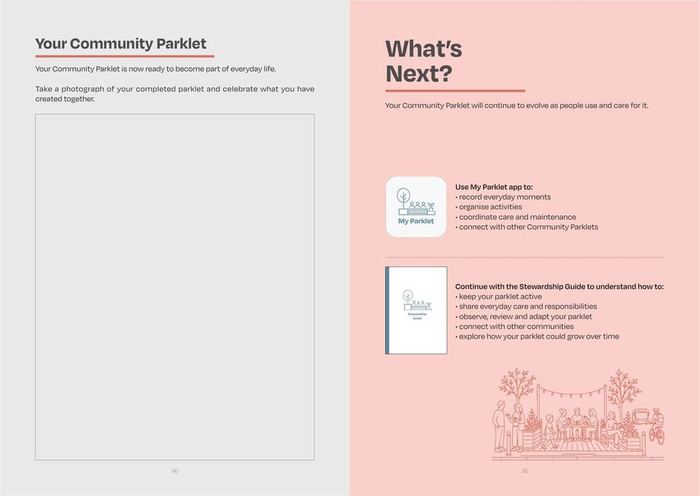
Community Parklet Catalogue

From shared priorities to adaptable spatial decisions

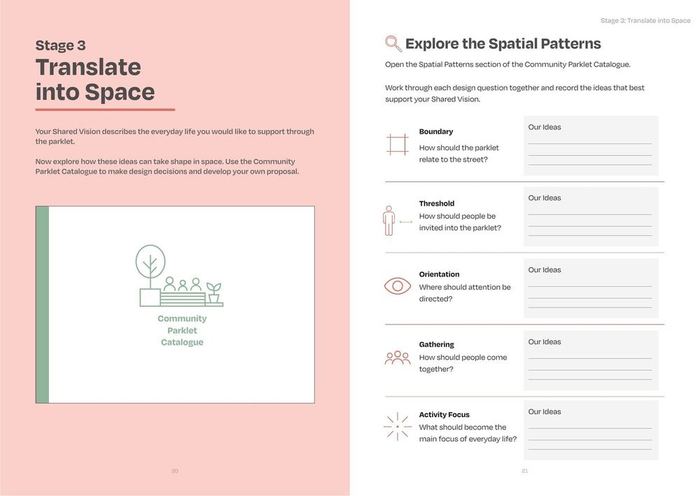
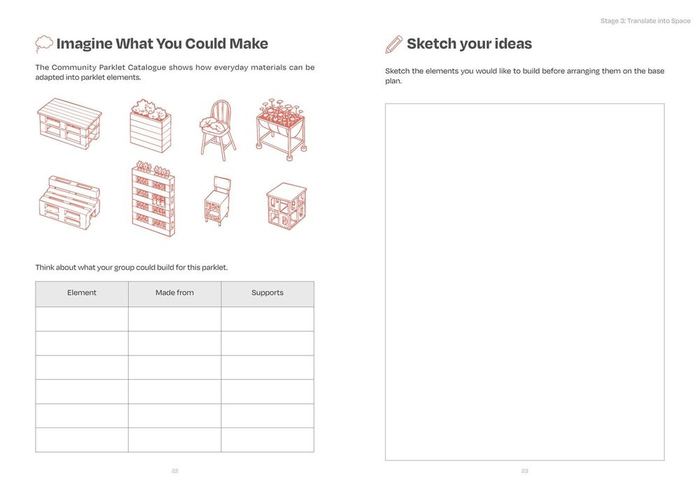
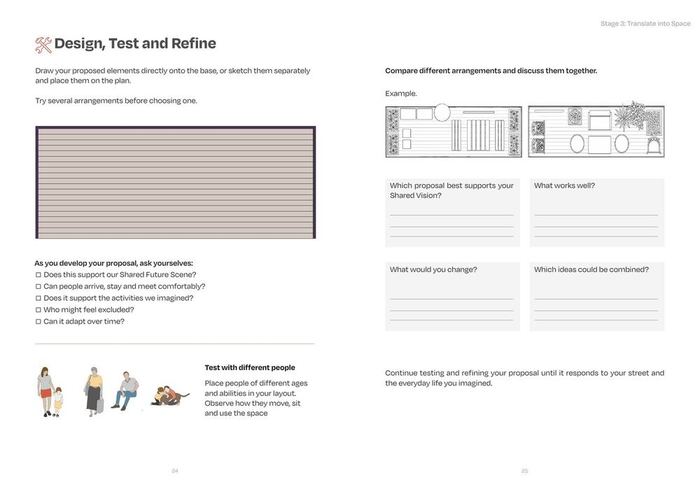
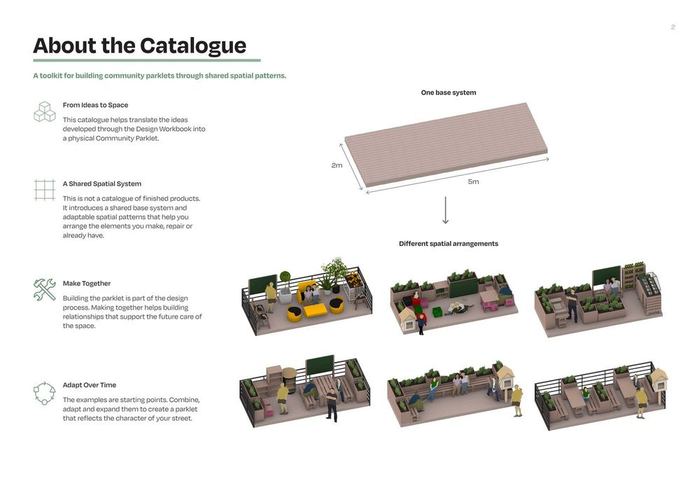
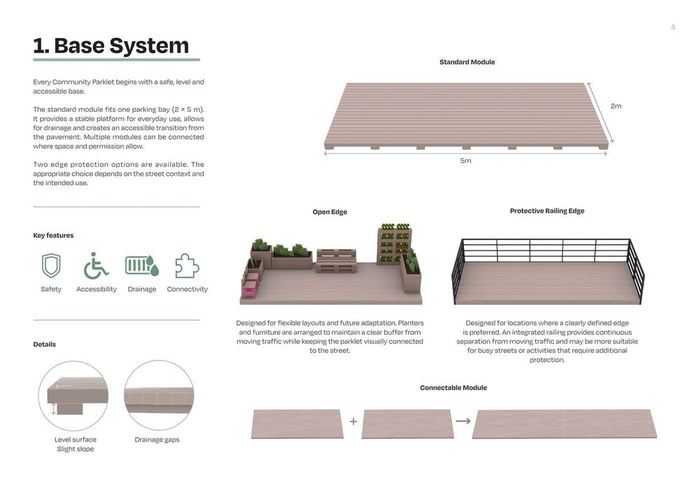
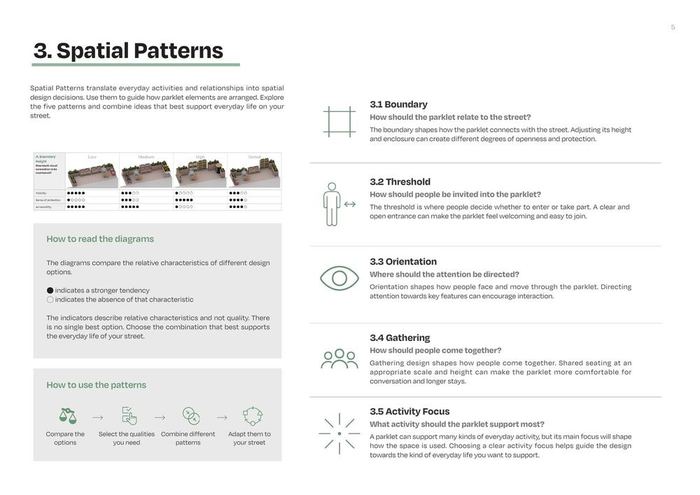
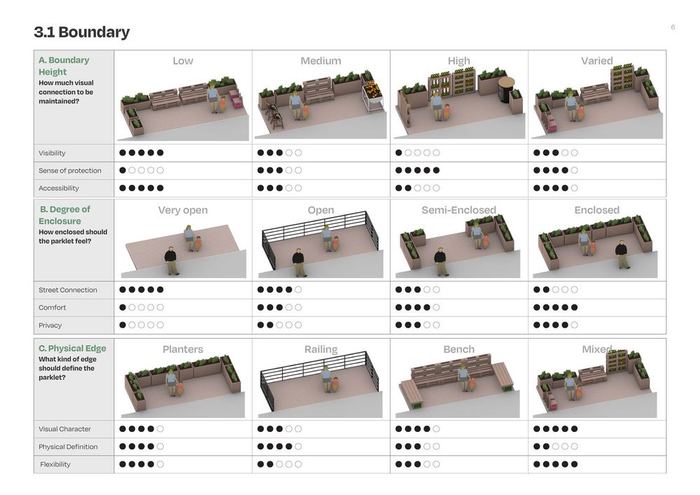
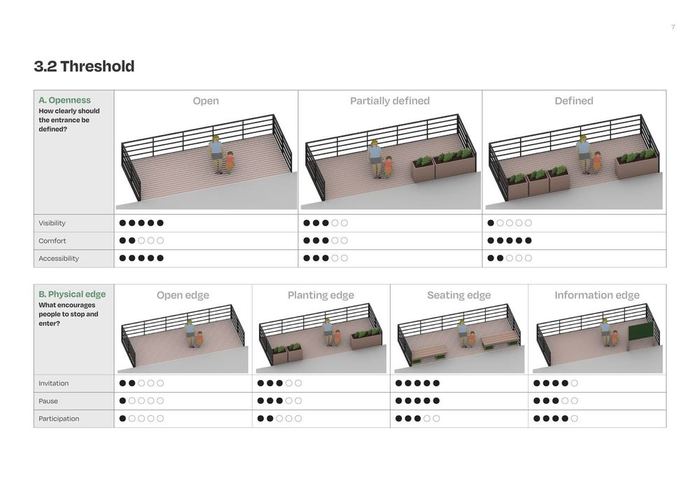
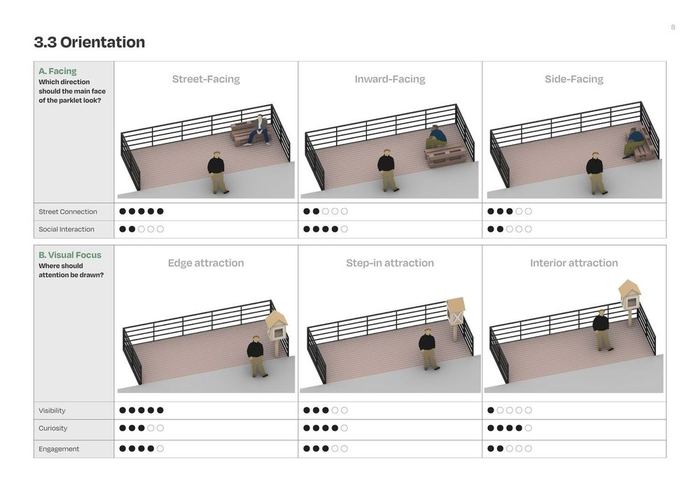
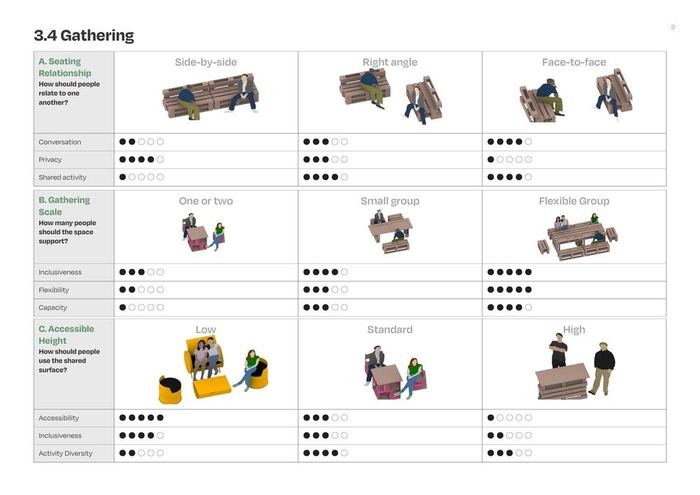
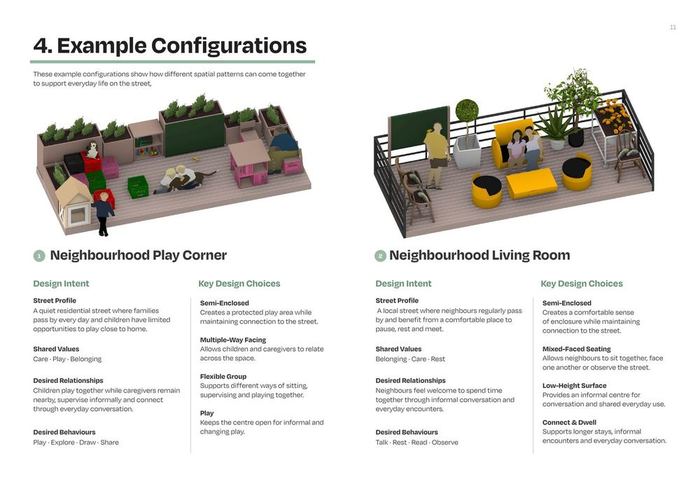
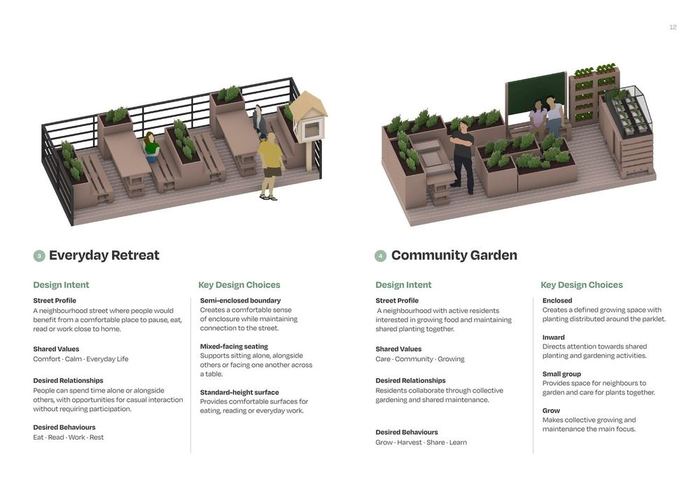
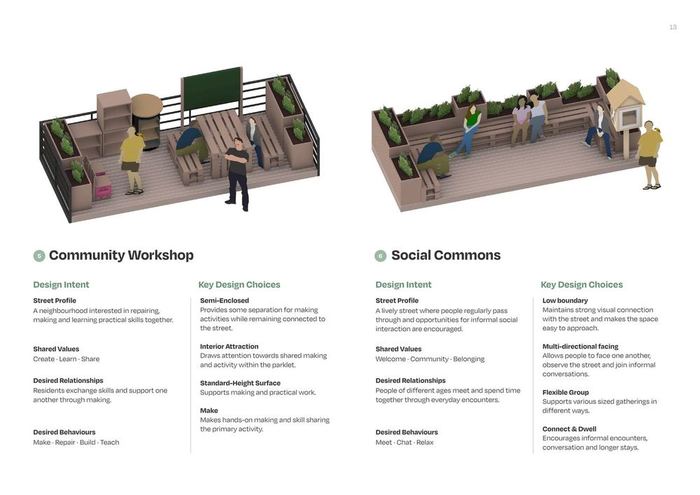
The Community Parklet Catalogue helps participants translate the shared priorities developed through the Design Workbook into physical space.

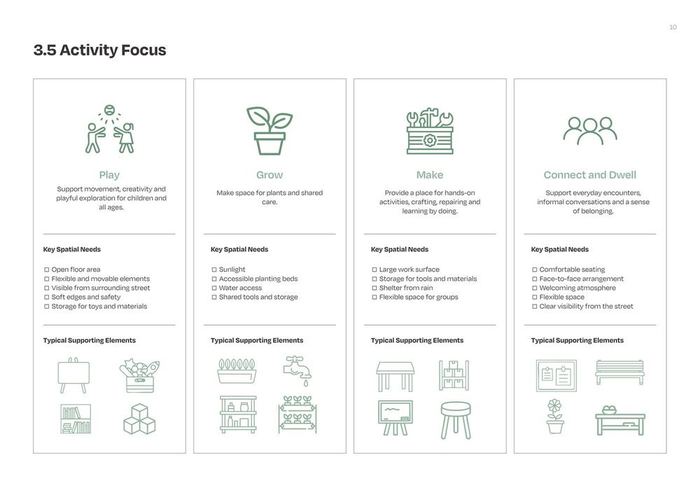
It provides a shared base system and adaptable spatial patterns instead of prescribing finished parklet designs. Participants can explore how different spatial arrangements, boundaries and elements respond to their street context and priorities.

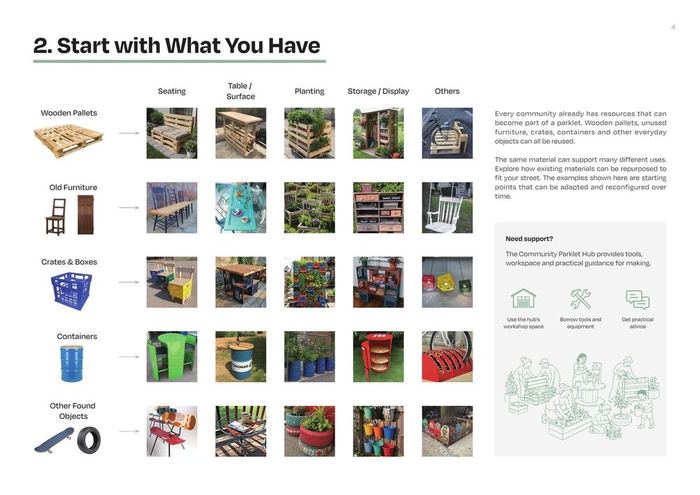
The catalogue also encourages communities to work with materials they already have and to continue modifying the parklet as needs change.

Community Parklet Catalogue page image 1
Community Parklet Catalogue page image 2
Community Parklet Catalogue page image 3
Community Parklet Catalogue page image 4
Community Parklet Catalogue page image 5
Community Parklet Catalogue page image 6
Community Parklet Catalogue page image 7
Community Parklet Catalogue page image 8
Community Parklet Catalogue page image 9
Community Parklet Catalogue page image 10
Community Parklet Catalogue page image 11
Community Parklet Catalogue page image 12
Community Parklet Catalogue page image 13
Community Parklet Catalogue page image 14

Steward & Adapt

Stewardship Guide

Supporting the parklet after installation

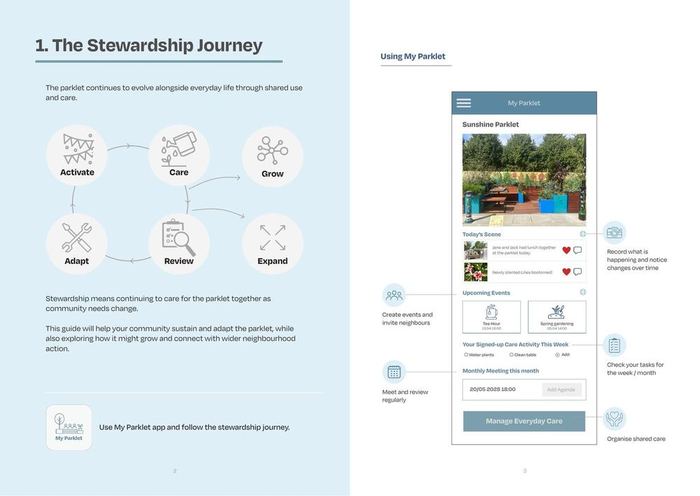
The Stewardship Guide supports communities as the parklet becomes part of everyday neighbourhood life.

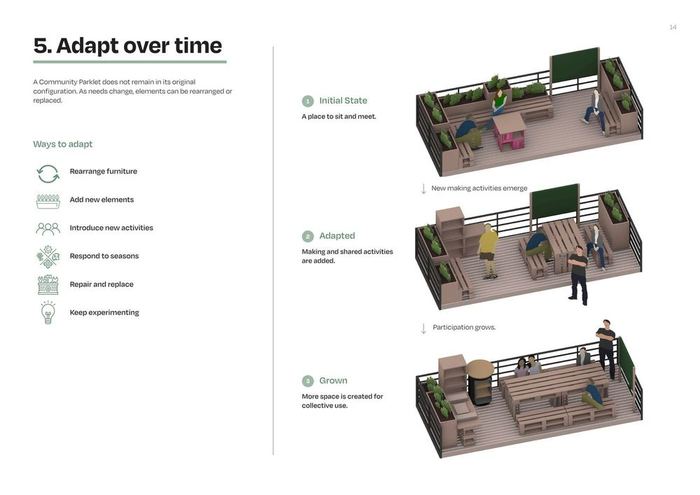
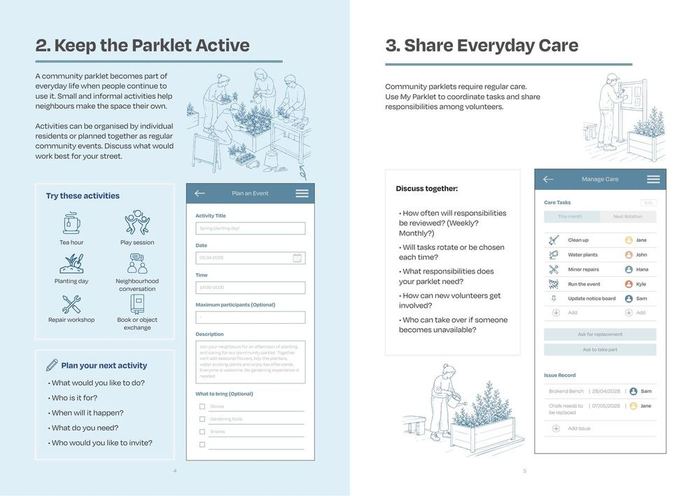
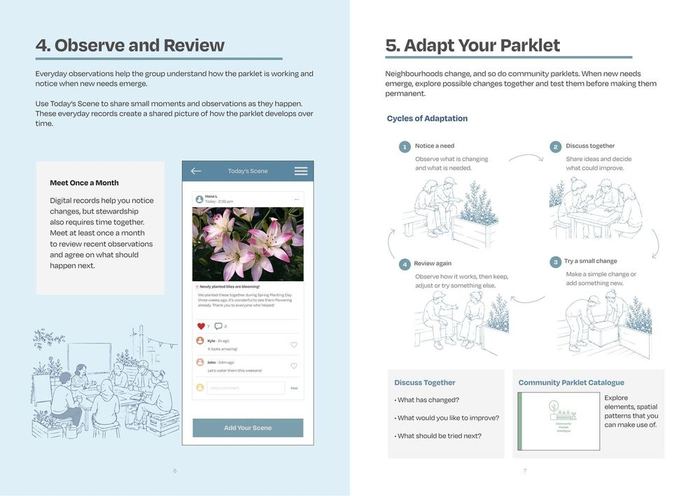
It treats installation as the beginning of a longer process. The guide helps communities keep the space active, distribute everyday care, respond to changing needs and build connections with other parklet groups.

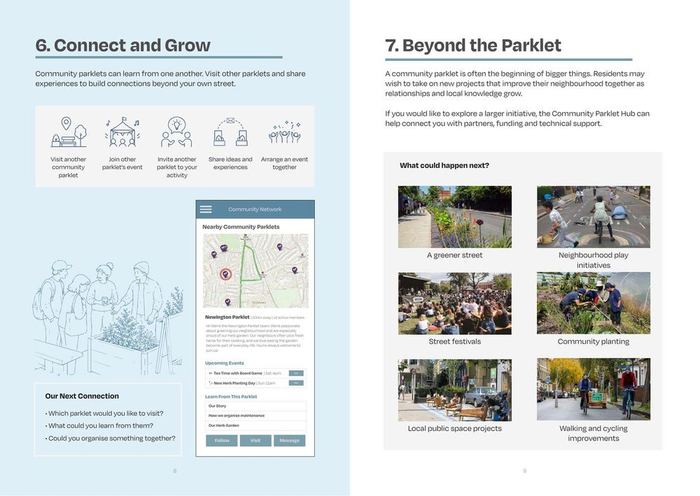
My Parklet complements face-to-face participation by providing a shared space for coordinating care, recording issues, organising activities and connecting with the Community Parklet Hub.

Community Parklet Stewardship Guide page image 1
Community Parklet Stewardship Guide page image 2
Community Parklet Stewardship Guide page image 3
Community Parklet Stewardship Guide page image 4
Community Parklet Stewardship Guide page image 5
Community Parklet Stewardship Guide page image 6

Supporting the Process

Community Parklet Hub

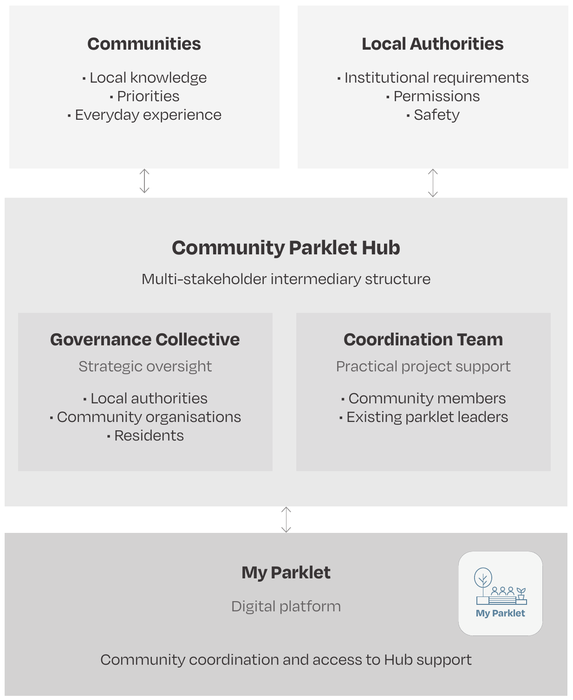
The Community Parklet Hub was proposed as an intermediary between residents and local authorities.

It provides coordination, permission support and practical help throughout the project, while the My Parklet platform supports communication and long-term stewardship.

Proposed operating structure of the Community Parklet Hub
06

Testing the Framework

The framework was tested through three hypothetical scenarios based on the contrasting street conditions identified during fieldwork.

Each scenario shows how the same framework could lead to a different spatial response when applied to a different everyday context.

Scenario 1

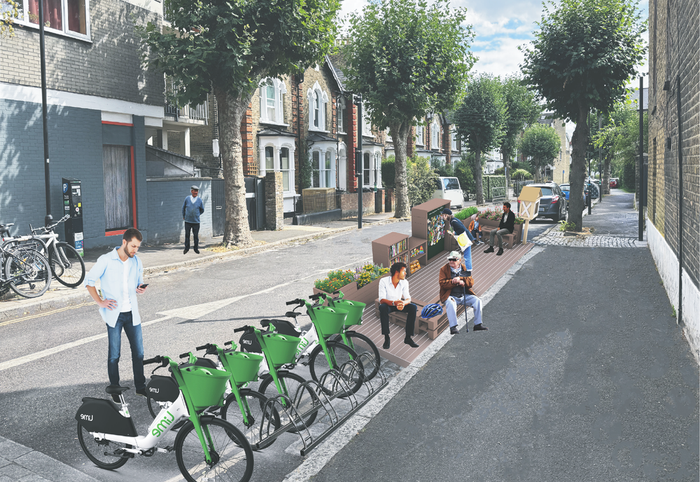
Everyday Exchange Hub

A shared space for brief encounters, exchange and everyday participation.

Everyday Exchange Hub spatial configuration

Scenario 2

Neighbourhood Growing Hub

A shared growing space connected to existing patterns of stopping and neighbourhood activity.

Neighbourhood Growing Hub spatial configuration

Scenario 3

Children’s Street Commons

A place for everyday play, care and informal neighbourhood interaction.

Children's Street Commons spatial configuration
07

Beyond the Parklet

A community parklet can become a starting point for wider change.

As participation grows, activities, relationships and small spatial interventions can extend into the surrounding street and neighbourhood.

Potential network of community parklets across Hackney, including existing, modified and new parklets and their influence relationships

Case 01

Everyday Exchange Hub

Exchange activities can become part of everyday street life and create more opportunities to pause and meet.

Over time, seating, planting and temporary street elements can extend these activities into the surrounding area.

Speculative local expansion of Everyday Exchange Hub

Case 02

Neighbourhood Growing Hub

Collective growing can extend from the parklet into nearby green space and develop into a shared neighbourhood garden.

The parklet can remain a hub for gathering while connecting to a wider landscape of shared care.

Speculative local expansion of Neighbourhood Growing Hub

Case 03

Children’s Street Commons

Play and neighbourhood activity can extend from the parklet into the surrounding street.

Temporary play elements, planting and other street changes can support its gradual development as a more people-centred neighbourhood space.

Speculative local expansion of Children's Street Commons

Project Reflections

Conclusion

01

Community parklets can become evolving civic practices.

Their social value develops through continued participation, use and care. As residents remain involved in shaping and stewarding the space, the parklet can become embedded within everyday neighbourhood life.

02

A socio-temporal approach can expand context-responsive design.

Everyday patterns of activity and change over time can become a shared basis for spatial decisions. Observing and discussing these patterns allows different local experiences to inform how a place is designed.

03

Participation needs to continue beyond installation.

Community involvement can extend from project initiation and collective design into making, stewardship and adaptation. This gives residents an ongoing role in shaping shared urban space as needs change.

04

Reclaiming the kerbside can reshape both space and governance.

Community parklets reallocate street space for shared use while giving residents an ongoing role in its care. With sustained organisational support, small interventions can become shared neighbourhood resources and possible starting points for wider change.

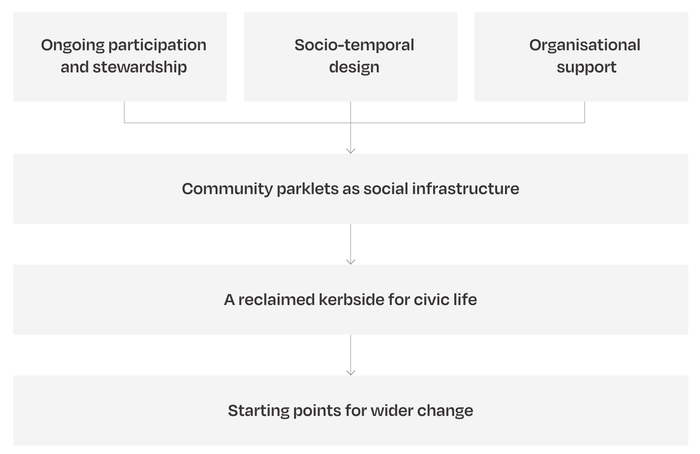
Figure 8.1. Ongoing participation and stewardship, socio-temporal design and organisational support lead to community parklets as social infrastructure, a reclaimed kerbside for civic life and starting points for wider change.

Project information

Reclaiming the Kerbside

Year
2026
Location
Hackney, London
Format
Major Research Project, MSc Urban Design and City Planning
Full title
Rethinking Parklets as Social Infrastructure through a Socio-Temporal Understanding of Everyday Urban Life
Institution
The Bartlett School of Planning, University College London
Supervisor
Dr Jan Kattein
Visual material
Research drawings, maps and visualisations by Sehee Hwang unless otherwise noted.