Walking revealed where connections might begin.
Daily routes brought people from different groups through the same streets and stopping points. Mapping these movements helped identify places where new encounters could emerge.
How can everyday walking routes and shared interests create new connections between local communities?
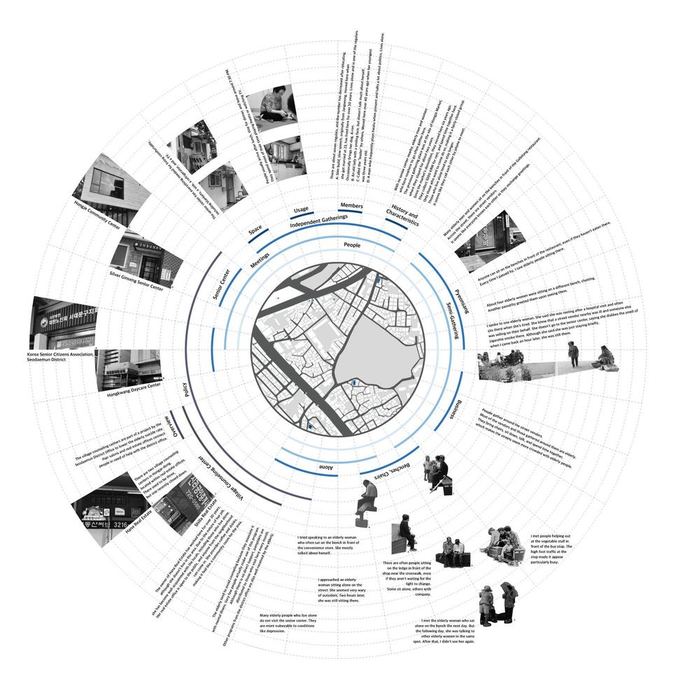
Interwoven Hongje began with fieldwork on how elderly residents spent time in Hongje-dong.
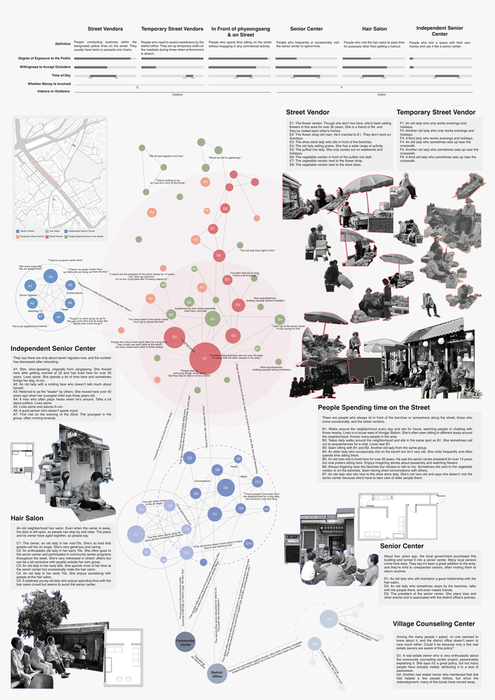
Community life appeared across senior centres, hair salons, street vendors, benches and other informal gathering places. Some residents belonged to established groups. Others followed regular walking routes through the neighbourhood and spent time at informal gathering places along the street.
Many of these groups shared hobbies such as hwatu (Korean card game), gardening and growing flowers, but there was little contact between them.
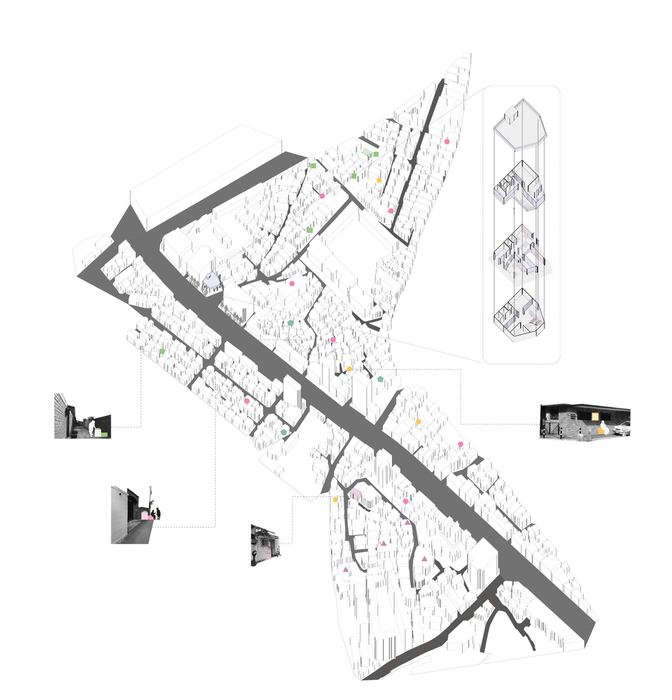
The project explored how existing walking routes and shared interests could create new connections between these separate groups. The proposal introduced small hobby pavilions along everyday routes and a central Headquarters for larger shared activities.
Fieldwork focused on where elderly residents stayed, met others and spent time during the day.
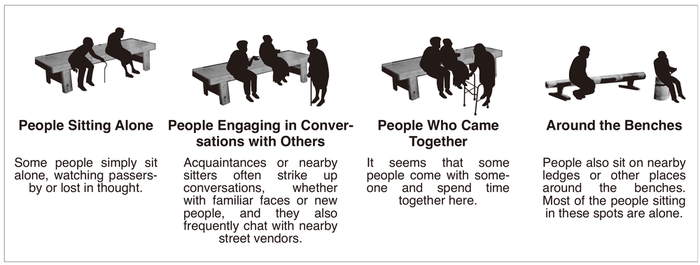
Some gathered in senior centres. Others met in a hair salon or around street vendors. Many spent time on benches and other places along the street.
One of these places was a pyeongsang, a wooden platform in front of Myeong Charcoal BBQ, a local restaurant. People came alone or with acquaintances. Some just watched passers-by. Others spoke with people sitting nearby or with street vendors.
The pyeongsang had no fixed membership. Different people used it at different times, making it an important point of contact within the neighbourhood.
The flower stall owner beside the pyeongsang appeared across several social groups.
She had worked in the area for more than thirty years and knew many local residents. People stopped at her shop, spoke with her and met others nearby.
Her relationships across different local groups suggested how an existing social network could become a starting point for new connections.
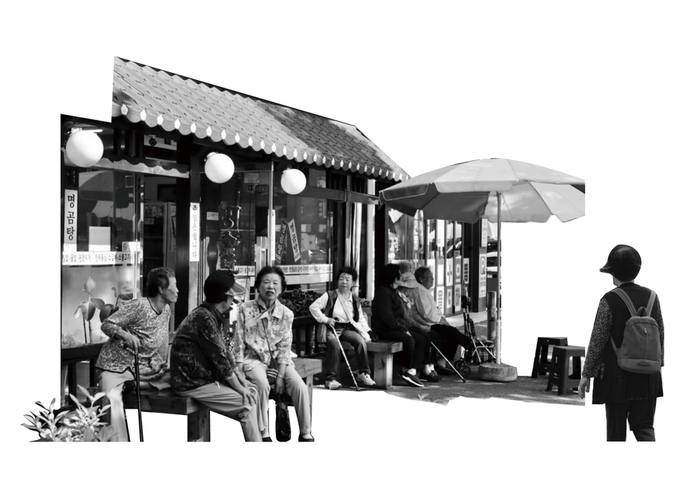
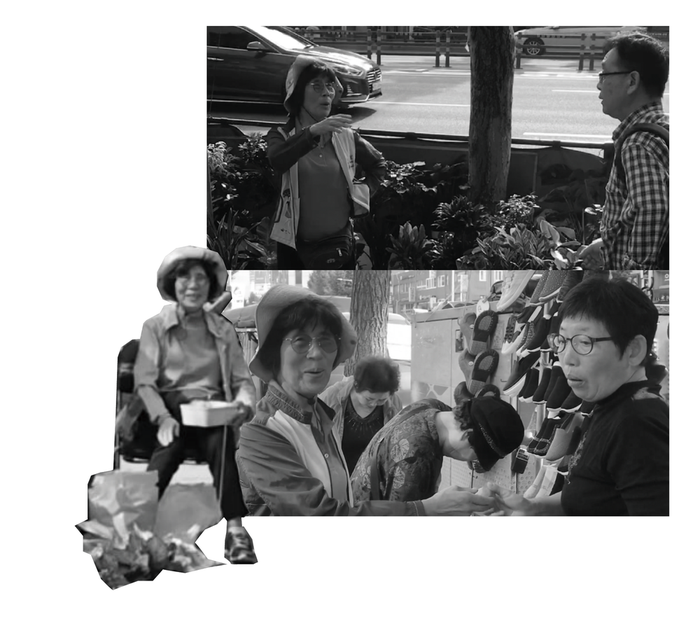
Many elderly residents followed regular routes through Hongje-dong. Their walks passed homes, the market, street vendors and familiar places to sit.
The pyeongsang was one of these stopping points. Walking brought different people through the same place even when they belonged to different communities.
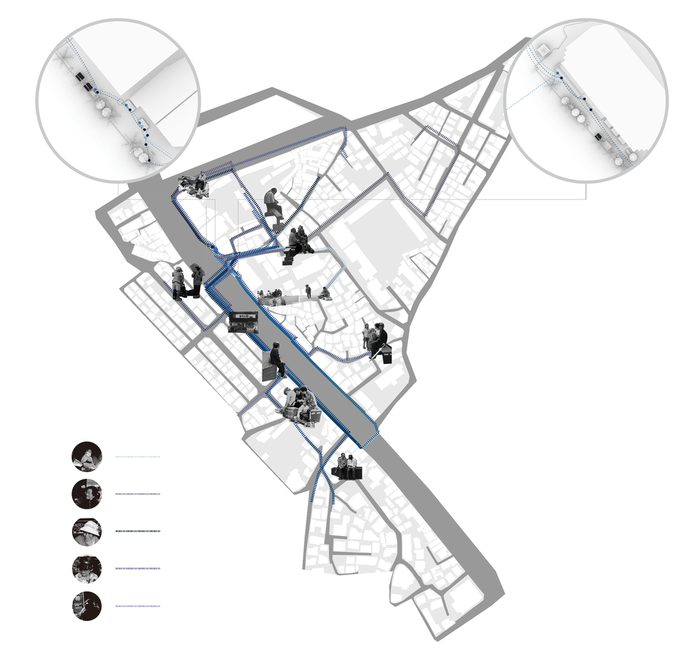
Mapping these routes alongside existing groups revealed another pattern. Several communities shared similar hobbies, especially hwatu and gardening. These activities were active within each group, but there was little contact between the groups themselves.
This raised a new question: how could small interventions along existing walking routes create more opportunities for people to meet?
I tested this through a small intervention before developing the architectural proposal.
I set up hwatu sessions in four public spaces along local walking routes.
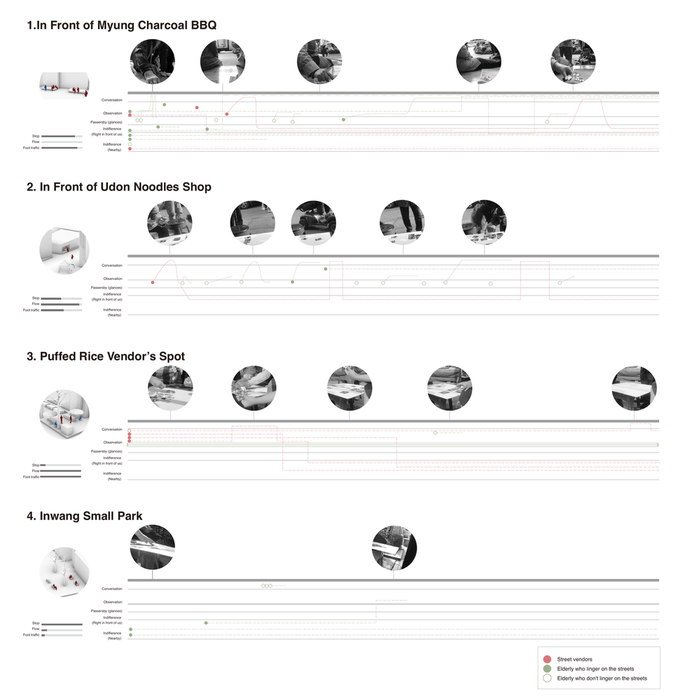
Responses changed from place to place. Some people passed by. Others stopped to watch, started conversations or joined the game.
The experiment showed that a familiar activity could give people a reason to stop. It also showed that the surrounding street conditions affected how people responded.
These observations informed the spatial strategy that followed.
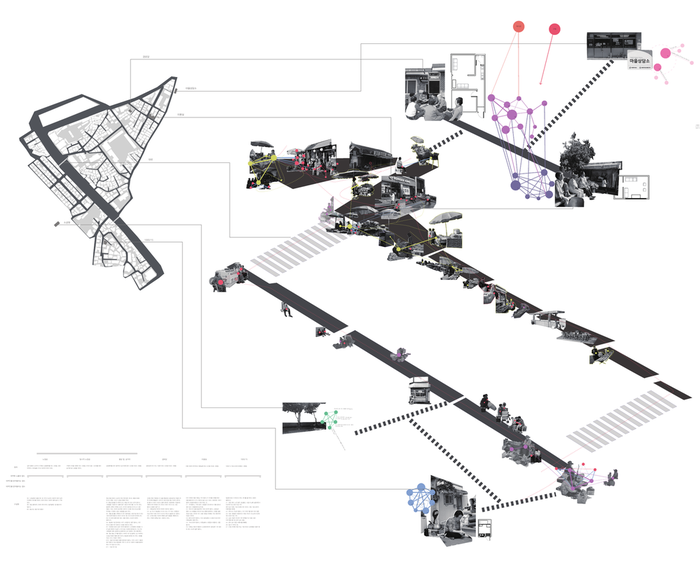
The proposal translated three findings from the fieldwork into a spatial strategy.
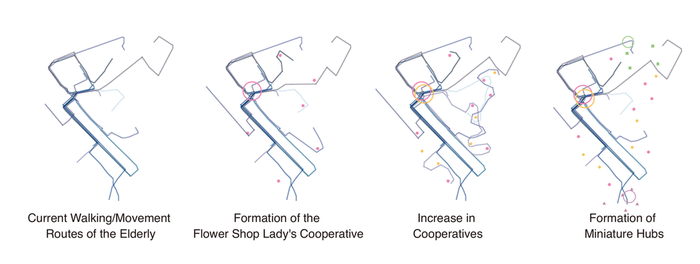
Existing walking routes became locations for intervention.
Instead of creating new destinations away from everyday movement, small structures were placed along routes that residents already used.
Shared hobbies became opportunities for connection.
Activities such as growing flowers, gardening, food and crafts provided a reason for people with similar interests to meet.
Existing social relationships became starting points for the network.
The first network began with the flower stall owner, whose relationships already connected different residents in the neighbourhood.
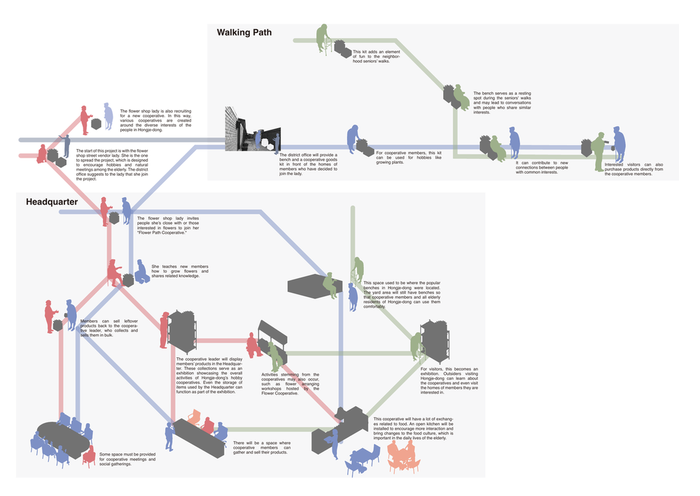
Residents interested in flowers could grow them outside their homes, share knowledge and sell surplus flowers through the shop. The same structure could later extend to other interests found in the neighbourhood.
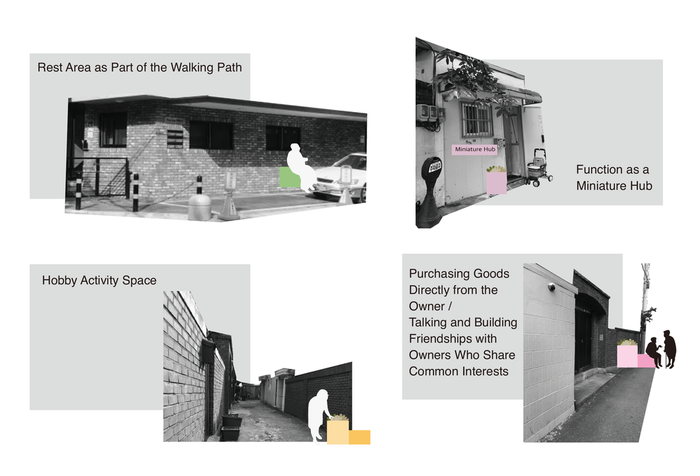
The pavilions work as stopping points along existing walking routes.
For pedestrians, they provide somewhere to sit and rest. For participants, they offer space to continue hobbies such as growing plants or making objects.
Objects and activities can also be displayed toward the street. Someone passing by might notice a familiar activity, stop and begin a conversation.
As more residents participate, new pavilions can appear along other walking routes. Different hobby groups can gradually become connected through a wider neighbourhood network.
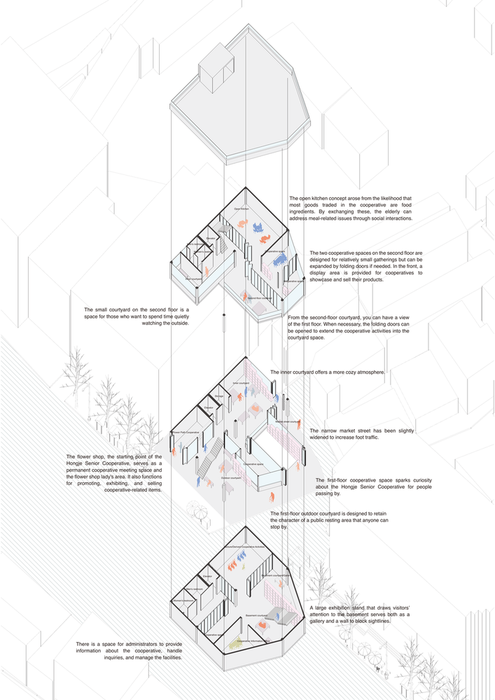
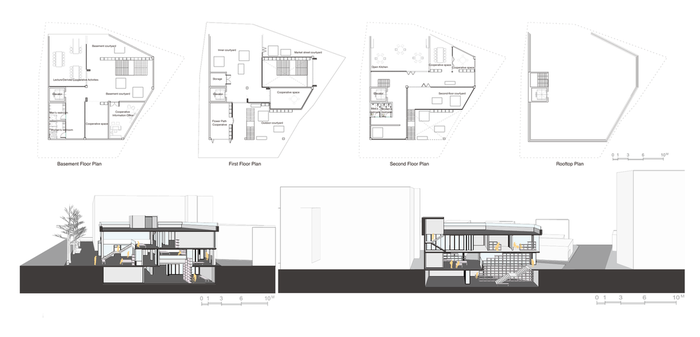
The Headquarters provides space for activities that grow beyond the smaller pavilions, including meetings, workshops, exhibitions, markets and shared meals.
It is located where well-used neighbourhood benches had previously stood. Seating remains part of the new building so that people can continue to stop there without having to join a programme or group.
Inside, rooms are organised around courtyards and shared spaces. An open kitchen supports food-related activities, while folding doors allow rooms to expand for larger gatherings.
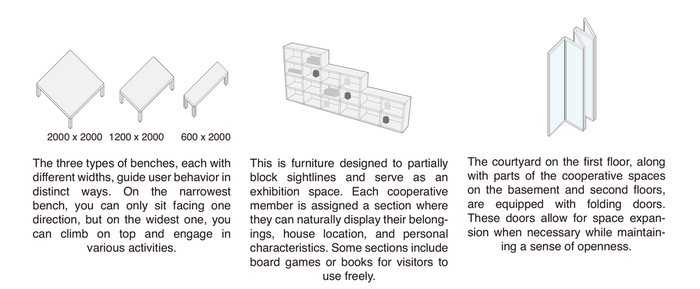
The Headquarters provides a shared space where activities and relationships that begin across the neighbourhood can meet and develop further.
Daily routes brought people from different groups through the same streets and stopping points. Mapping these movements helped identify places where new encounters could emerge.
The hwatu experiment showed how a familiar activity could briefly change the social use of a public space. Stopping, watching and joining created opportunities for interaction between people who might otherwise pass one another.
The proposal did not begin by introducing a new community structure. It developed from walking routes, hobbies, gathering places and social relationships already present in the neighbourhood.
The pavilions and Headquarters explored how spatial interventions could support these existing connections and create more opportunities for them to grow.