1. Introduction
Over the past decades, tactical urban interventions have increasingly been framed as effective means of activating underused urban spaces and fostering social interaction. Characterised by small scale, low cost, and adaptability, they are widely promoted within urban design and planning discourse as tools for revitalising everyday urban environments.
However, it remains unclear to what extent these interventions generate meaningful and inclusive forms of sociability. While tactical urbanism is frequently linked with increased activity and visible use, existing approaches tend to equate these observable indicators with sociability itself. In doing so, they overlook how interaction, participation, and social relations are shaped by uneven social conditions, governance structures, and temporal processes.
This review examines how sociability in tactical urbanism has been conceptualised in the literature. It argues that existing approaches tend to prioritise short-term, observable effects as indicators of sociability, thereby overlooking the conditions through which it is produced, shaped, and sustained. It therefore reconceptualises sociability as a socially uneven, politically structured, and temporally embedded process.
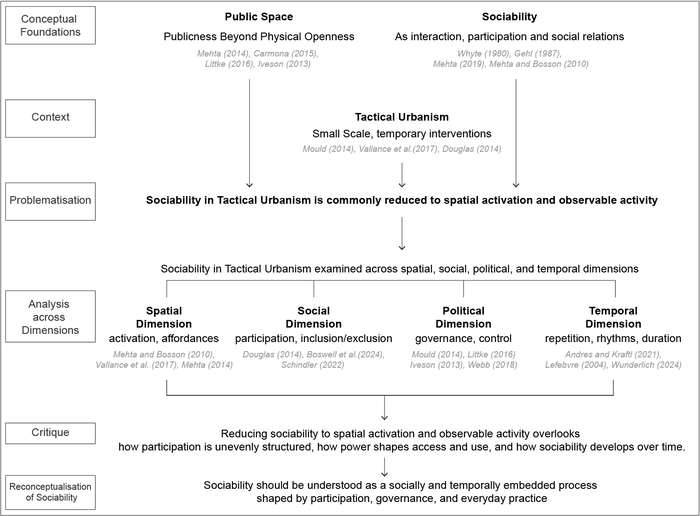
Diagram 1: Conceptual Framework of the Literature Review
2. Public Space and Sociability in Public Spaces
2.1 Public space beyond physical openness
Public space is often described as open and accessible to all. However, such an understanding risks oversimplifying how space is actually used and experienced, overlooking how public space is structured, negotiated, and regulated in practice.
As Mehta (2014) argues, public space cannot be understood through ownership alone but must be examined in relation to patterns of access and use. This shifts attention towards lived experience, revealing that accessibility is uneven and context-dependent. While legal openness remains significant, it is insufficient to explain how public space functions in practice.
This complexity is reflected in critiques of the distinction between public and private space. Carmona (2015) emphasises that public space is constituted through hybrid governance arrangements involving multiple actors and interests. Littke (2016) similarly demonstrates that publicness is shaped not only by formal accessibility but also by control, management, and user perception, while Iveson (2013) shifts the emphasis further by arguing that publicness is actively produced through claim-making and contestation.
Taken together, these perspectives suggest that public space is not a fixed condition, but one continuously produced through use, regulation, and negotiation.
2.2 Rethinking sociability in public space
Sociability has often been treated as a key indicator of successful public space. Whyte (1980) identified sociability through observable indicators such as group presence, interaction, and duration of stay. Gehl (1987) similarly shifted attention from the physical form of urban environments to how they support social life, emphasising the role of design in shaping conditions for interaction. Together, these works foregrounded lived experience as central to understanding urban space.
However, subsequent urban design discourse has often translated this insight into a tendency to equate visible activity with sociability, treating increased use and interaction as indicators of success. This risks treating visible activity as equivalent to social engagement, overlooking the conditions through which participation is structured and experienced.
Subsequent work has challenged this reduction. Mehta (2019) suggests sociability is not uniform but varies in intensity and form, while Mehta and Bosson (2010) further demonstrate that spaces of sociability are experienced unevenly across social groups. These perspectives highlight that sociability is not uniformly produced but is shaped by uneven conditions of access, inclusion, and social differentiation.
From this perspective, sociability is better understood as a socially uneven and context-dependent condition. It must be examined in relation to how interaction, participation, and social relations are organised and experienced in urban space. This points to the need for a critical reassessment of how sociability is framed in relation to tactical urbanism.
3. Tactical Urbanism: Definitions and Ambiguities
Tactical urbanism is commonly understood as a set of small-scale, temporary interventions designed to produce change over short periods, often with limited resources. As Mould (2014) suggests, the term functions as an umbrella concept, bringing together diverse practices under a shared language of flexibility and adaptability.
However, this breadth introduces conceptual ambiguity. Tactical urbanism encompasses interventions that differ in authorship, duration, governance, and intended publics. Yet they are often treated as a coherent category. While these characteristics are commonly linked to experimentation, accessibility, and the opening up of restricted spaces (Vallance et al., 2017; Douglas, 2014), they do not in themselves explain how sociability emerges, for whom, or under what circumstances.
As a result, claims about the capacity of tactical urbanism to foster sociability are often generalised across fundamentally different contexts. Sociability is thus implicitly treated as an inherent outcome of intervention, rather than a context-dependent condition shaped by specific social, spatial, and institutional arrangements. It must instead be analysed in relation to how participation is structured, how access is governed, and how practices unfold over time.
4. Tactical Urbanism and Sociability
This section examines how sociability, understood in terms of interaction, participation, and social relations, is framed in relation to tactical urbanism across different dimensions.
4.1 Spatial dimension: sociability as spatial activation
In much of the literature, sociability is understood in relation to spatial conditions that enable interaction. Interventions are therefore framed as creating opportunities for gathering by modifying the physical environment.
Mehta and Bosson (2010) emphasise the role of physical features such as seating, shelter, and enclosure in supporting social interaction, particularly in relation to ‘third places’ as informal settings for everyday exchange. Similarly, Vallance et al. (2017) argue that temporary or small-scale spatial interventions can transform underutilised sites into spaces that support activity and encounter.
While this spatial framing foregrounds the material conditions that enable interaction, it also encourages sociability to be understood primarily in terms of visible activity. This risks assuming a direct relationship between spatial activation and sociability, treating presence as equivalent to social engagement. As Mehta (2014) suggests, the quality of public space depends not only on observable use but also on broader experiential and social conditions, including inclusiveness, safety, and comfort. Thus, focusing only on spatial activation narrows the understanding of sociability, prioritising measurable activity over the conditions through which it is produced.
4.2 Social dimension: differentiated participation and experience
Participation in tactical urban interventions is not evenly distributed across social groups. Douglas (2014) argues that many such interventions are driven by relatively privileged groups associated with particular values, lifestyles, and forms of urban engagement. As a result, practices framed as urban ‘improvement’ may reflect specific aesthetics and norms that not all users share. This dynamic is reinforced as interventions inscribe particular values and modes of inhabiting space, shaping selective forms of participation and belonging (Boswell et al., 2024).
Accessibility issues further complicate this. Schindler (2022) shows that temporary interventions may introduce new barriers or reinforce existing ones, particularly for people with disabilities, even when spaces appear publicly accessible. Therefore, increased activity does not necessarily correspond to expanded participation or more inclusive social relations.
In this sense, sociability is not uniformly produced but unevenly produced, shaped by unequal conditions of access, inclusion, and belonging. It depends not only on who participates but also on how participation is structured and on what forms of social relations are made possible.
4.3 Political dimension: governance of sociability
Sociability in tactical urbanism is also actively structured through decisions about how space is governed and who is permitted to participate.
Tactical practices initially framed as experimental or grassroots can be incorporated into formal policy contexts and repurposed as governance tools that support branding, redevelopment, or broader policy objectives (Mould, 2014). For example, Littke (2016) shows that, since their institutionalisation, parklets, while presented as open and public, often function as semi-public spaces shaped by private sponsorship and commercial interests, restricting who can use them and how.
From a more explicitly political perspective, the significance of such tactical interventions lies in the kinds of political claims they enable. As Iveson (2013) argues, urban interventions do not in themselves transform the city. Their importance lies in the questions they raise about rights, legitimacy, and participation.
Taken together, sociability in tactical urbanism is shaped by political arrangements that organise access and define legitimate forms of use. The key issue is not whether interventions generate activity, but who has the power to define space and control participation. In this sense, sociability becomes a site of political negotiation, reflecting competing claims over the use and meaning of urban space (Webb, 2018).
4.4 Temporal dimension: sociability as an ongoing process
The spatial, social, and political perspectives outlined above explain how sociability is enabled, distributed, and governed. However, they remain limited, as they tend to focus on immediate, observable effects and pay little attention to how interactions and social relations develop over time.
As Andres and Kraftl (2021) argue, research on temporary urbanism has often approached temporality in terms of duration rather than process. The authors instead propose a process-oriented perspective that considers how interventions interact with existing conditions and evolve over time.
Lefebvre (2004) suggests that urban space is shaped by rhythms and everyday practices that repeat and change. These rhythms organise patterns of movement, encounter, and interaction in everyday life. From this perspective, sociability emerges through processes of repetition and stabilisation. While momentary encounters may constitute interaction, they do not necessarily develop into sustained sociability without continuity.
This highlights a key limitation in existing approaches. By focusing on short-term activation and visible outcomes, they overlook how sociability is maintained, adapted, and transformed through everyday practice in tactical urbanism. As Wunderlich (2024) argues, urban experience is shaped not only by spatial form but by temporal patterns of use.
Sociability in tactical urbanism can therefore be understood as a temporally embedded process that requires attention to how these interventions are sustained and integrated into ongoing social life.
| Dimension | Key Question | Key Authors | Conceptual Focus |
|---|---|---|---|
| Spatial | What enables interaction? | Whyte (1980) Gehl (1987) Mehta & Bosson (2010) Vallance et al. (2017) | Sociability is understood through spatial conditions and physical affordances that enable presence and interaction |
| Social | Who participates? | Douglas (2014) Boswell et al. (2024) Schindler (2022) | Sociability is shaped by uneven participation, access, and experiences across different social groups |
| Political | Who controls participation? | Mould (2014) Littke (2016) Iveson (2013) Webb (2018) | Sociability is structured through governance, control, and contestation over access and use |
| Temporal | How is sociability sustained over time? | Andres & Kraftl (2021) Lefebvre (2004) Wunderlich (2024) | Sociability emerges through repetition, rhythms, and the temporal organisation of everyday practices |
Table 1: Analytical Dimensions of Sociability in Tactical Urbanism
5. Conclusion
Tactical urbanism is often understood as a means of activating underused space and fostering sociability. Yet such accounts remain limited as they tend to treat sociability as a direct outcome of spatial intervention or increased activity, overlooking the conditions through which it is produced and sustained.
This review has argued that sociability in tactical urbanism cannot be understood as an immediate effect of intervention, but as a process shaped by multiple, interrelated conditions. It depends on how interaction is enabled through spatial arrangements, how participation is socially differentiated, how access is structured through governance, and how social relations are sustained over time.
From this perspective, the significance of tactical urbanism lies not in producing activity, but in how it organises participation, defines access, and shapes the conditions under which social relations can emerge and persist. Therefore, sociability in tactical urbanism should be understood as a socially uneven, politically structured, and temporally stabilised process.
This reconceptualisation shifts the focus of evaluation of sociability in tactical urbanism from visible activity to the conditions through which sociability is produced and sustained. It calls for approaches that move beyond short-term measures of use to examine how social relations are organised, shaped, and maintained over time.
6. Reference List
Andres, L. and Kraftl, P. (2021) ‘New directions in the theorisation of temporary urbanisms: Adaptability, activation and trajectory’, Progress in Human Geography, 45(5), pp. 1237–1253.
Boswell, R., Collins, F. L., & Kearns, R. (2024). Experimentation, privilege, and difference: The politics of do-it-yourself urbanism. Geographical Research, 62(3), 377–388.
Carmona, M. (2015) ‘Re-theorising contemporary public space: A new narrative and a new normative’, Journal of Urbanism: International Research on Placemaking and Urban Sustainability, 8(4), pp. 373–405.
Douglas, G.C.C. (2014) ‘Do-it-yourself urban design: The social practice of informal “improvement” through unauthorized alteration’, City & Community, 13(1), pp. 5–25.
Gehl, J. (1987) Life Between Buildings: Using Public Space. New York: Van Nostrand Reinhold.
Iveson, K. (2013) ‘Cities within the city: Do-it-yourself urbanism and the right to the city’, International Journal of Urban and Regional Research, 37(3), pp. 941–956.
Lefebvre, H. (2004) Rhythmanalysis: Space, Time and Everyday Life. London: Continuum.
Littke, H. (2016) ‘Revisiting the San Francisco parklets: Problematizing publicness, parks, and transferability’, Urban Forestry & Urban Greening, 15, pp. 165–173.
Mehta, V. (2014) ‘Evaluating public space’, Journal of Urban Design, 19(1), pp. 53–88.
Mehta, V. (2019) ‘Streets and social life in cities: A taxonomy of sociability’, Urban Design International, 24(1), pp. 16–37.
Mehta, V. and Bosson, J.K. (2010) ‘Third places and the social life of streets’, Environment and Behavior, 42(6), pp. 779–805.
Mould, O. (2014) ‘Tactical urbanism: The new vernacular of the creative city’, Geography Compass, 8(8), pp. 529–539.
Schindler, S. (2022) ‘Making the Temporary Permanent: Public Space in a Postpandemic World’, Yale Law Journal Forum, 132, pp. 376–417.
Vallance, S. et al. (2017) ‘Temporary use and the onto-politics of “public” space’, Cities, 70, pp. 83–90.
Webb, D. (2018) ‘Tactical Urbanism: Delineating a Critical Praxis’, Planning Theory & Practice, 19(1), pp. 58–73.
Whyte, W.H. (1980) The Social Life of Small Urban Spaces. Washington, DC: Conservation Foundation.
Wunderlich, F. M. (2024). Temporal Urban Design: Temporality, Rhythm and Place. London: Routledge.
I declare that GenAI tools have been used in an assistive role in this coursework, in line with UCL/BSP guidance and good academic practice. I acknowledge the use of ChatGPT (OpenAI, https://chat.openai.com) and Grammarly (Grammarly Inc., https://www.grammarly.com) for partial translation to English, language refinement and word count reduction.
Word count (excluding tables and reference list): 1800